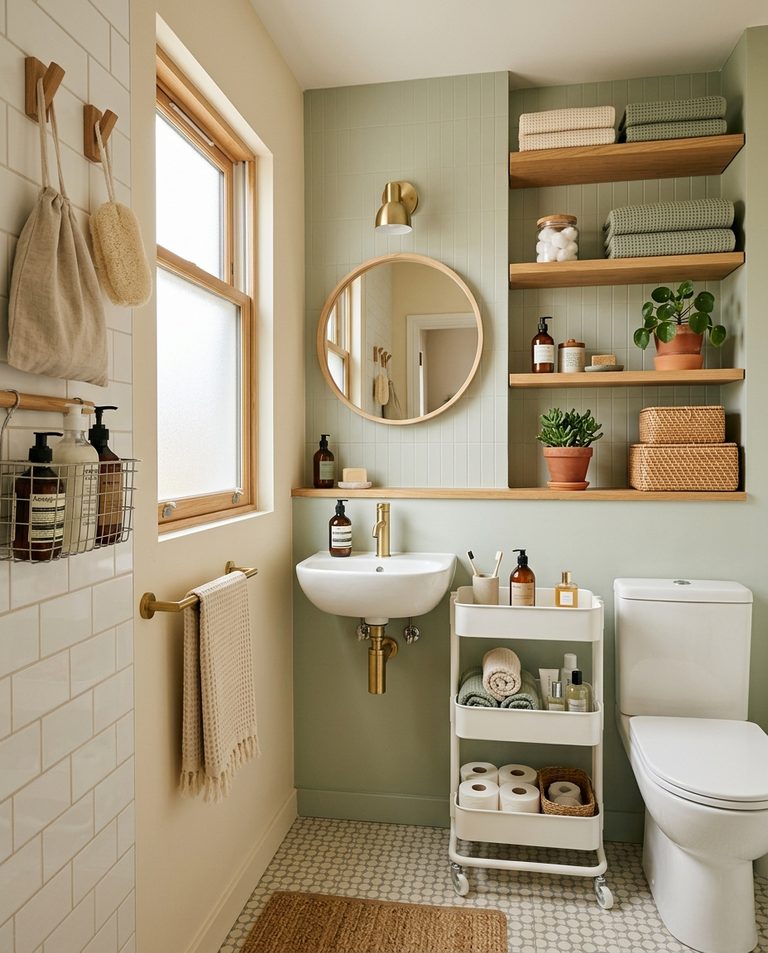
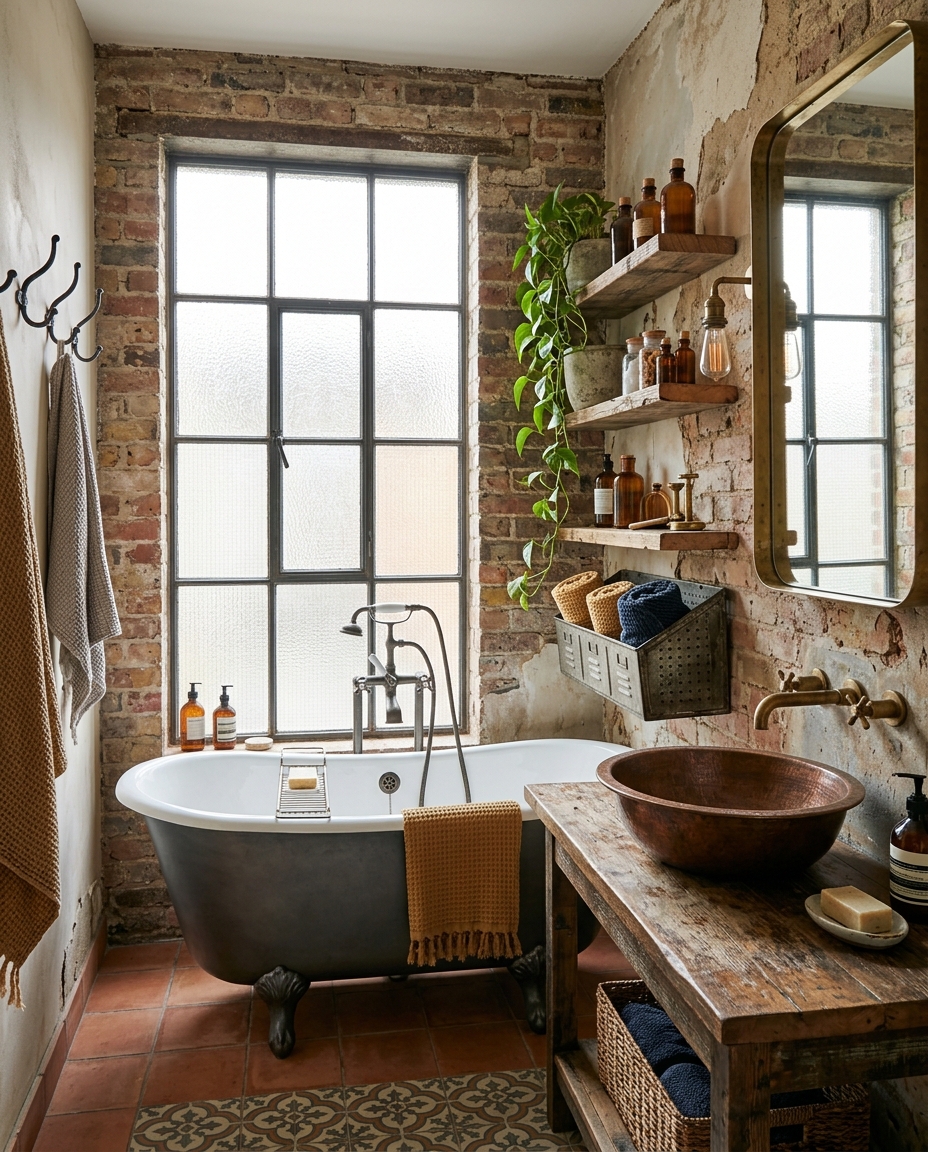
Small Bathroom Storage Ideas With No Cabinets
A bathroom without cabinets can be frustrating. Toiletries end up around the sink, towels have nowhere to go, and extra toilet paper seems to find its way into whatever corner is available.
But you don’t necessarily need built-in cabinetry to create useful storage. Shelves, baskets, carts, hooks, and a few overlooked areas can give your bathroom a place for everyday essentials without taking over the room.
The best small bathroom storage ideas with no cabinets depend on your layout, how much floor space you have, and whether you’re allowed to drill into the walls. Some solutions work well for homeowners, while others are particularly useful for renters.
Here are practical ways to store your bathroom essentials when cabinets simply aren’t part of the room.
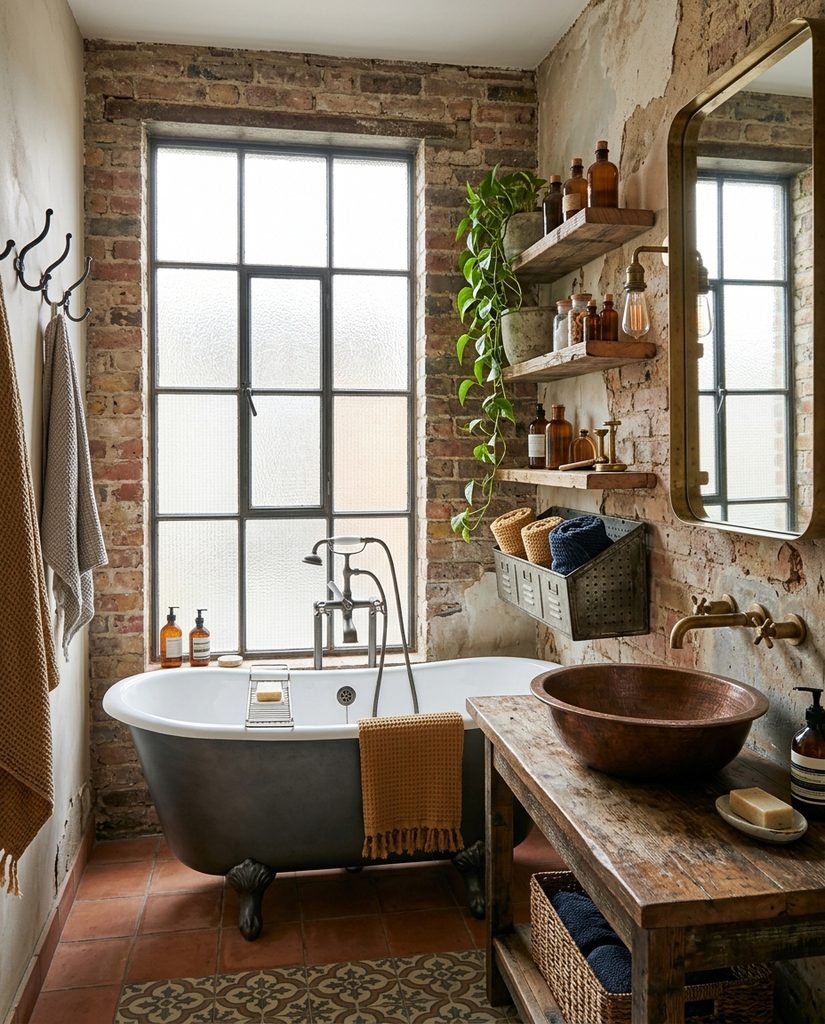
1. Install Floating Shelves
Floating shelves are one of the simplest ways to add storage when there’s no cabinet.
Use them for folded hand towels, skincare products, extra toilet paper, small baskets, or everyday toiletries. They work particularly well above the sink, beside the mirror, or on an otherwise empty wall.
The main trade-off is that everything stays visible. If the shelves become crowded, the bathroom can quickly look messy.
Best for: Toiletries, towels, baskets, and small bathroom essentials.
Where it works: Empty wall space above or beside the sink.
Watch out for: Installation requirements and shelves that are too deep for a narrow room.
2. Add an Over-the-Toilet Storage Unit
The space above the toilet is often one of the easiest areas to turn into storage.
A freestanding over-the-toilet unit can provide several shelves for toilet paper, towels, toiletries, and cleaning supplies without taking up much additional floor area.
Choose a size that leaves enough room around the toilet and doesn’t interfere with the bathroom door or other fixtures.
Best for: Toilet paper, towels, toiletries, and backup supplies.
Where it works: Bathrooms with unused vertical space above the toilet.
Watch out for: Units that are too wide or deep for the available space.
3. Use a Slim Rolling Cart
A narrow rolling cart can fit into spaces that aren’t large enough for a conventional cabinet.
Keep toiletries, hair products, toilet paper, or cleaning supplies on the shelves. Since the cart can move, it’s also convenient when you need to clean the floor or reach something behind it.
The downside is that it still uses floor space, so measure carefully before buying one.
Best for: Toiletries, hair products, cleaning supplies, and backups.
Where it works: Beside a vanity, toilet, wall, or other narrow gap.
Watch out for: Wheels and handles that make the cart wider than expected.
4. Put Everyday Items in Baskets
Baskets can provide simple storage without making the bathroom look like it’s full of organizers.
Place baskets on shelves or the floor, or use them inside an existing open storage unit. One basket can hold extra toiletries, another towels, and another cleaning supplies.
Choose sizes based on what you actually need to store rather than buying several baskets first and figuring out their purpose later.
Best for: Towels, toiletries, toilet paper, and backup products.
Where it works: Shelves, open storage units, under a sink, or on the floor where space allows.
Watch out for: Deep baskets that make small items difficult to find.
5. Use Wall-Mounted Organizers
When floor space is limited, wall-mounted organizers can move smaller items off the counter.
Depending on the design and installation method, they can hold toothbrushes, grooming supplies, skincare products, or other lightweight bathroom essentials.
Keep frequently used items within easy reach and avoid putting too many products on one wall.
Best for: Small everyday toiletries and grooming items.
Where it works: Beside the sink or mirror.
Watch out for: Weight limits and installation requirements.
6. Use the Back of the Door
The bathroom door is another storage surface that doesn’t require floor space.
An over-the-door organizer can hold toiletries, hair accessories, cleaning products, or other lightweight items.
Measure the door and surrounding clearance first. You need enough room for the door to close properly after the organizer is installed.
Best for: Small toiletries, hair accessories, and lightweight supplies.
Where it works: Behind the bathroom door.
Watch out for: Bulky organizers that interfere with the door or frame.
7. Choose a Small Freestanding Vanity
If your bathroom has a sink but no storage underneath it, a compact vanity can solve two problems at once.
It provides a surface for the sink and creates enclosed or open storage underneath, depending on the design.
Before choosing one, measure the existing plumbing and the available floor area. The vanity needs to fit without making the bathroom difficult to move around.
Best for: Everyday toiletries, cleaning supplies, towels, and personal-care products.
Where it works: Bathrooms with enough floor space to accommodate a vanity.
Watch out for: Plumbing compatibility and the amount of floor space it consumes.
8. Try a Narrow Vertical Storage Tower
A tall, narrow shelf can be useful when the bathroom has more wall height than floor width.
Use lower shelves for things you reach for regularly and higher shelves for extra towels or backup supplies.
This is one of the more useful forms of vertical bathroom storage because it adds several storage levels without requiring a wide cabinet.
Best for: Towels, toiletries, toilet paper, and backup supplies.
Where it works: Empty corners or narrow wall sections.
Watch out for: Tall furniture that isn’t appropriate for the available space or installation conditions.
9. Add Hooks for Towels and Robes
You don’t always need a cabinet or shelf to store towels.
A few appropriately placed hooks can keep towels and robes off the floor and free up other storage for smaller items.
Hooks are particularly useful when wall space is limited because they require very little depth.
Best for: Bath towels, hand towels, washcloths, and robes.
Where it works: Near the shower or on suitable wall space.
Watch out for: Overcrowding several wet towels in one small area.
10. Use a Shower Caddy
If there is no cabinet near the shower, the shower itself can hold some of the products you use there.
A shower caddy can keep shampoo, conditioner, body wash, and other shower products together instead of leaving them around the tub or shower floor.
Don’t use it as a reason to keep every product you own in the shower. Store backups elsewhere when possible.
Best for: Shampoo, conditioner, body wash, and other shower products.
Where it works: Inside or around the shower, depending on the storage design.
Watch out for: Products and storage that aren’t suitable for the particular shower setup.
11. Use a Slim Shelf Beside the Toilet
If there’s a small gap beside the toilet, a narrow shelf may be enough to create useful storage.
It can hold toilet paper, wipes, small baskets, or a few toiletries.
Measure the available width and depth carefully. A shelf that sticks too far into the walking area can make a small bathroom feel even tighter.
Best for: Toilet paper, small toiletries, and bathroom supplies.
Where it works: Narrow gaps beside the toilet.
Watch out for: Blocking the toilet area or making cleaning difficult.
12. Store Items Above the Door
In some bathrooms, the wall area above the door can provide storage without interfering with normal movement.
A shallow shelf can hold items that aren’t needed every day, such as spare towels or backup toiletries.
Because this area is higher up, it shouldn’t become the home for anything you need frequently or anything difficult to lift safely.
Best for: Extra towels and backup supplies.
Where it works: Bathrooms with suitable wall space above the door.
Watch out for: Hard-to-reach items and installation requirements.
13. Use a Small Storage Bench
If your bathroom has enough floor space, a narrow storage bench can serve more than one purpose.
It can provide a place to sit while also holding towels or other bathroom supplies, depending on the design.
This is more useful in bathrooms where the bench has a clear purpose. In a very small room, adding furniture simply for storage may take up more space than it’s worth.
Best for: Towels and selected bathroom supplies.
Where it works: Larger bathrooms with an unused section of floor.
Watch out for: Taking up valuable floor space.
14. Make Use of Under-Sink Space
If your sink has an open base rather than a cabinet, the area underneath may still be useful.
A few carefully chosen bins or baskets can organize cleaning supplies, toilet paper, towels, or backup toiletries.
The plumbing will determine how much usable space you actually have, so measure around the pipes before buying anything.
For more detailed ideas, see [Under Sink Bathroom Organization Ideas].
Best for: Cleaning supplies, toilet paper, towels, and backup products.
Where it works: Open vanities and pedestal-sink areas where there is usable space underneath.
Watch out for: Exposed plumbing, moisture, and organizers that block access to pipes.
15. Add a Small Peg Rail
A peg rail can give you several hanging points without taking up much wall depth.
Use it for towels, robes, toiletry bags, or other items that can be hung.
This can work especially well in bathrooms where shelves would stick too far into the room.
Best for: Towels, robes, and hanging toiletry bags.
Where it works: Suitable wall space near the sink or shower.
Watch out for: Weight limits and installation requirements.
16. Use a Freestanding Ladder Shelf
A ladder-style shelf provides several levels of open storage while keeping a relatively narrow footprint.
Use baskets on the shelves if you want to hide smaller items and keep the bathroom looking less cluttered.
Because the shelves are open, this option works best when you’re willing to keep the contents organized.
Best for: Towels, baskets, toiletries, and decorative items.
Where it works: An empty wall or corner with enough floor space.
Watch out for: Shelves that are too deep for the room.
17. Give Hair Tools Their Own Storage
Hair dryers, straighteners, brushes, and their cords can quickly take over the sink area.
A dedicated organizer can keep them together and move them off the counter.
Choose a storage method appropriate for the tools you’re storing and follow the manufacturer’s safety instructions, especially for heated appliances.
Best for: Hair dryers, brushes, styling tools, and cords.
Where it works: Near the vanity or another convenient storage area.
Watch out for: Storing heated appliances before they’re safe to handle.
18. Keep Backup Supplies Outside the Bathroom
Not every bathroom supply has to live in the bathroom.
If space is extremely limited, keep larger quantities of toilet paper, toiletries, soap, or cleaning supplies in another storage area of your home.
Bring replacements into the bathroom when you need them.
This doesn’t add physical storage to the bathroom, but it can make a noticeable difference when every shelf and corner is already occupied.
Best for: Bulkier backup supplies.
Where it works: Linen closets, bedroom storage, laundry areas, or other suitable household storage.
Watch out for: Keeping the items somewhere you won’t forget about them.
Renter-Friendly Storage When You Can’t Drill
A bathroom without cabinets can be particularly challenging in a rental because permanent shelves or cabinets may not be an option.
Fortunately, several solutions don’t require drilling.
Freestanding shelves and carts are usually easy to reposition. Over-the-door organizers can use existing surfaces, while baskets can turn open shelving into more contained storage.
Depending on the product and your rental agreement, removable mounting solutions may also be an option for lightweight items. Always follow the product’s instructions and check your lease before installing anything.
For more ideas, see:
- [Small Bathroom Storage Without Drilling]
- [Small Bathroom Storage Ideas for Renters]
The important thing is to choose storage that you can remove without leaving the bathroom damaged or difficult to return to its original condition.
How to Keep Open Shelving From Looking Cluttered
Open shelving gives you useful storage, but it also puts everything on display.
A few simple habits can keep it under control.
Group similar products together. Keep skincare, hair products, and spare toiletries in separate areas.
Use baskets for smaller items. A basket can hide several small products that would otherwise make a shelf look busy.
Keep everyday products accessible. Don’t put things you use several times a day on the highest shelf.
Leave some empty space. A shelf doesn’t need to be completely full to be useful.
Avoid buying storage just to fill it. If you don’t need the extra capacity, don’t add more containers simply because there’s an empty shelf.
Open storage works best when you can see what you have without having to move several things out of the way.
How to Choose the Right Storage for Your Bathroom
Before buying anything, take a few measurements.
Measure the width, depth, and height of the space you want to use. Then check whether doors, drawers, the toilet, sink, shower, or walking path will be affected.
For wall storage, consider the position of mirrors, outlets, light fixtures, and other items already attached to the wall.
For under-sink storage, measure around the plumbing.
Also think about accessibility. A storage solution isn’t very useful if you have to move three other items every time you need your toothpaste.
If you’re choosing between two options that hold similar amounts, the one that’s easier to clean and easier to access may be the more practical choice.
What Should You Store in a Bathroom Without Cabinets?
Start with the things you use every day.
Keep frequently used toiletries, towels, toilet paper, and shower products within easy reach. Put backup supplies somewhere less prominent.
If space is extremely limited, avoid storing items in the bathroom simply because they’re bathroom-related. Cleaning supplies, bulk toilet paper, and extra toiletries can often be stored elsewhere in the home.
The goal isn’t to fit everything into one room. It’s to make the things you use there easy to access.
Frequently Asked Questions
How do I store bathroom essentials without cabinets?
Use a combination of shelves, baskets, carts, hooks, over-the-toilet storage, and door organizers. Start with vertical and unused spaces before adding furniture that takes up valuable floor space.
What is the best storage for a bathroom with no cabinets?
There isn’t one solution that works for every bathroom. Floating shelves are useful for wall space, carts work well in narrow gaps, and over-the-toilet units can use otherwise unused vertical space.
How can I store towels without a bathroom cabinet?
Use hooks, floating shelves, ladder shelves, baskets, or a suitable freestanding storage unit. Keep everyday towels somewhere easy to reach and store extras higher or elsewhere in the home.
How do renters add bathroom storage without drilling?
Freestanding shelves, rolling carts, over-the-door organizers, baskets, and other removable options can add storage without permanent wall installation. Check your lease before installing anything.
What can I use under a bathroom sink with no cabinet?
If the area is open and dry enough, use baskets or small bins for toiletries, cleaning supplies, toilet paper, or towels. Measure around the plumbing before choosing an organizer.
How do I keep open bathroom shelves organized?
Group similar items, use baskets for smaller products, keep frequently used items within easy reach, and avoid filling every shelf completely.
How can I add storage to a very narrow bathroom?
Focus on shallow vertical storage, narrow carts, hooks, over-the-door organizers, and other solutions that don’t significantly reduce the walking path. For more ideas, see [Narrow Bathroom Storage Ideas].
Affiliate Disclosure
Living in Less may earn a commission if you purchase a product through an affiliate link, at no additional cost to you. Affiliate recommendations are included only when the product category may help solve the storage problem discussed in the article. Product availability, features, and pricing can change, so check the retailer’s current information before purchasing.
Storage Products Worth Considering
Slim rolling cart: Useful for a narrow floor gap that can accommodate movable storage.
Over-the-door organizer: Helpful when wall and cabinet space are limited.
Stackable storage bins: Useful for grouping toiletries or supplies under an open sink.
Floating shelves: A practical option when you have suitable wall space and can install shelves securely.
Measure your bathroom first. The right storage product is the one that fits your space and solves a specific problem, not simply the one with the most compartments.
Final Thoughts
A bathroom without cabinets can still be organized. You just have to look beyond traditional bathroom furniture.
Start with the space you already have: the wall above the toilet, empty corners, the back of the door, the area beneath an open sink, and unused vertical space. Then decide which items need to stay in the bathroom and which can be stored elsewhere.
You don’t need to add storage everywhere. A few well-chosen solutions that fit your layout can be enough to keep toiletries, towels, and bathroom essentials under control.
If you’re working with a particularly small bathroom, you may also want to read [Small Bathroom Storage Ideas for Tiny Spaces] for more ways to make limited space work harder.