Small Bathroom Storage Ideas for Tiny Spaces
A small bathroom can get messy fast. A few bottles around the sink, some towels, extra toilet paper, and everyday toiletries can make an already tight room feel even smaller.
You don’t necessarily need more square footage. In many cases, the better solution is to make better use of the space that’s already there.
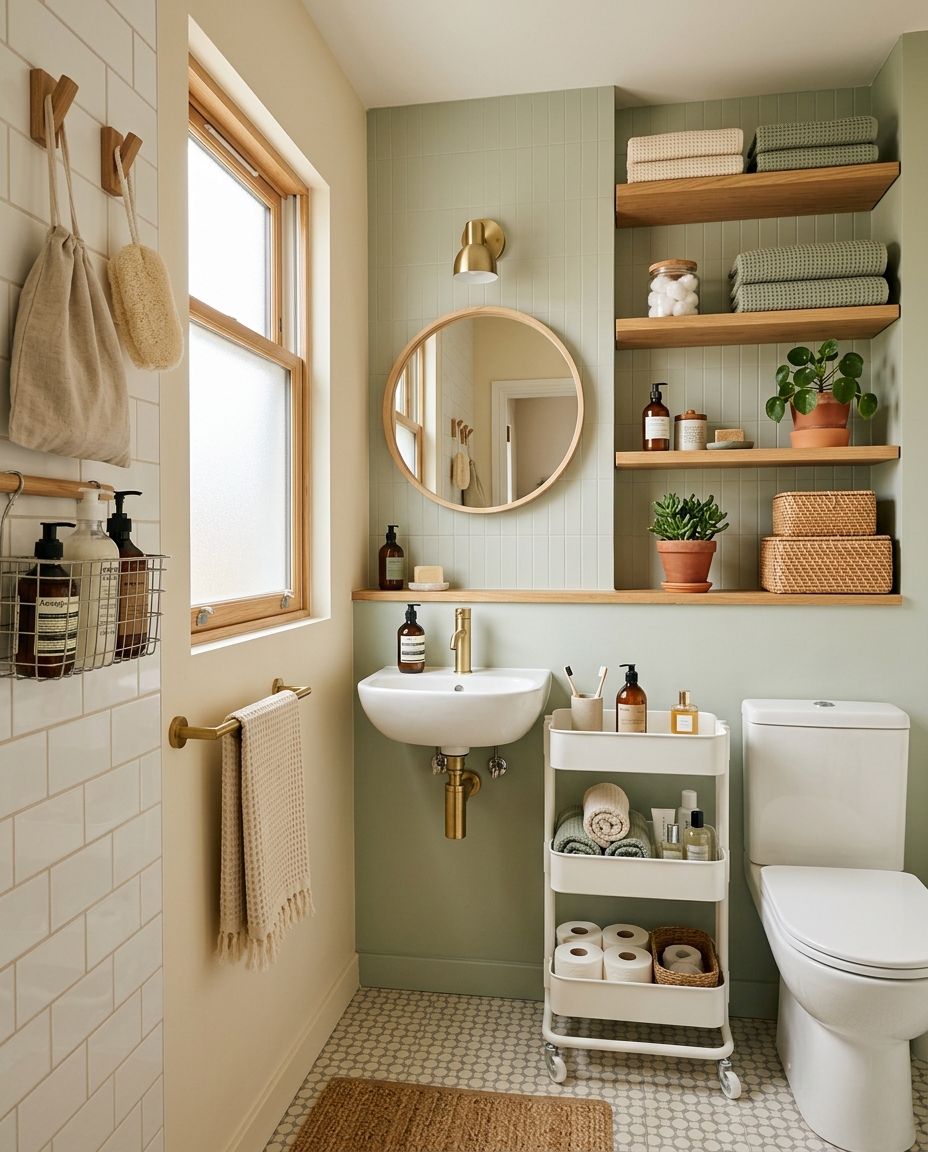
The most useful small bathroom storage ideas for tiny spaces tend to focus on three things: using vertical space, making existing storage more efficient, and keeping the floor as clear as possible.
Whether you’re dealing with an apartment bathroom, a rental, a condo, or a tiny home, these ideas can help you find storage without making the room harder to use.
1. Use the Wall Above the Toilet
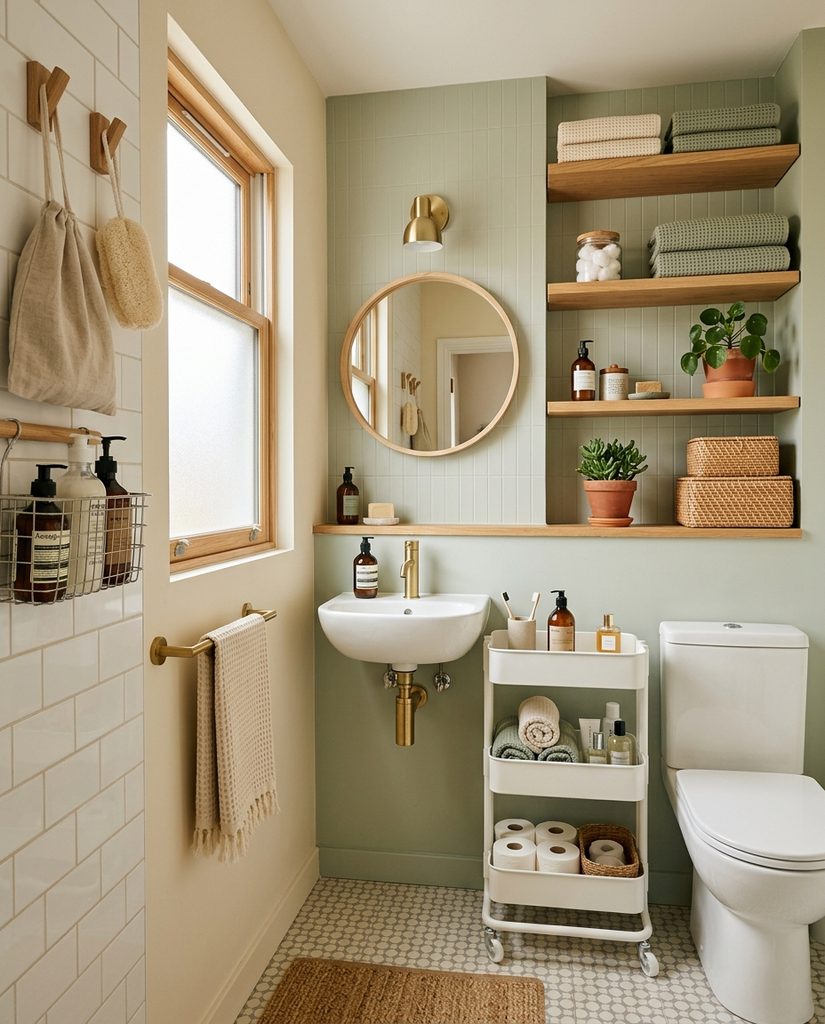
The wall above the toilet is often wasted space. A slim shelving unit can turn it into a useful spot for toilet paper, towels, toiletries, or small baskets.
In a narrow bathroom, pay attention to depth. A shelf that’s too deep can make the area around the toilet feel cramped.
If you rent, a freestanding over-the-toilet shelf is worth considering because it can add storage without permanently changing the wall.
2. Go Vertical Instead of Wider
When floor space is tight, look up.
A tall, narrow shelving unit can give you several storage levels without taking up much floor space. This works particularly well in an empty corner or along a narrow section of wall.
Put things you use often on the easier-to-reach shelves. Less frequently used items can go higher.
That’s the main advantage of vertical bathroom storage: you can add capacity without spreading furniture across the floor.
3. Make Better Use of the Vanity
If you already have a bathroom vanity, look at what’s happening inside it before buying another piece of furniture.
Small bins, stackable organizers, and adjustable shelves can make a large difference, especially when the cabinet is mostly open space.
Keep everyday products toward the front and backups farther back.
Don’t forget the plumbing. Measure around the pipes and drain before buying an organizer. A container that fits the cabinet opening may still be too large once the plumbing is taken into account.
For more ideas, see our guide to [Under Sink Bathroom Organization Ideas].
4. Add a Slim Rolling Cart
A narrow rolling cart can make use of a small gap beside the vanity, toilet, or wall.
Use it for toiletries, towels, toilet paper, or cleaning supplies. Because it rolls, you can pull it out when you need something and move it when you’re cleaning.
The downside is simple: it still uses floor space. If the bathroom is extremely narrow, shelves or wall storage may be a better choice.
5. Use the Back of the Bathroom Door
The back of the bathroom door is easy to overlook, but it can hold quite a bit of lightweight storage.
An over-the-door organizer can be used for toiletries, hair accessories, cleaning products, or other small items.
Before buying one, measure the door and check the clearance. You want the door to close normally without the organizer hitting the frame or nearby fixtures.
6. Consider a Mirrored Medicine Cabinet
If you’re already replacing a bathroom mirror, a mirrored medicine cabinet can give you storage and a mirror in the same space.
It’s useful for smaller items such as skincare products, toothbrushes, grooming supplies, and other things you don’t necessarily want sitting on the counter.
For renters, installation can be the limiting factor. If you can’t modify the wall, look at freestanding or removable alternatives instead.
7. Give the Shower Area Its Own Storage
Shampoo, conditioner, body wash, razors, and other products can quickly take over the edge of a tub or shower.
A shower caddy, corner shelf, or suitable hanging organizer can keep those bottles together and off the floor.
Try to keep only the products you actually use regularly in the shower. Store backups somewhere else if possible.
If you’re renting, check your lease before installing anything that requires permanent changes.
8. Use Corner Shelves
Corners are awkward for many pieces of furniture but can work well for shallow shelves.
A corner shelf can hold toiletries, skincare products, folded hand towels, or a few small baskets without taking up the same amount of floor space as a cabinet.
For a narrow bathroom, keep the shelves shallow. You don’t want storage sticking out far enough to become an obstacle.
9. Swap a Towel Bar for Hooks
If several towels need to fit into a small bathroom, hooks can be more practical than adding another long towel bar.
You can use them for bath towels, hand towels, robes, or small toiletry bags.
Just leave enough room between items for towels to dry. Packing several wet towels onto one small area defeats the purpose of the storage.
10. Give Extra Toilet Paper a Dedicated Home
Spare toilet paper doesn’t need to take over a shelf or sit in an awkward corner.
A narrow basket, vertical holder, or slim cabinet can keep extra rolls together and easy to grab.
Place it somewhere that’s accessible but doesn’t interfere with the toilet, door, or your cleaning routine.
If your bathroom doesn’t have built-in storage, this is one small problem that can be solved with a very simple setup.
For more ideas, see [Small Bathroom Storage Ideas With No Cabinets].
11. Use Baskets to Group Similar Items
Open shelving can start looking cluttered when every product is sitting on its own.
Instead, group similar items in small baskets. For example, one basket could hold hair products while another holds extra skincare or toiletries.
You don’t need a basket for everything. The point is to keep related items together and make them easy to move when you need to clean the shelf.
12. Use the Space Beside the Vanity
That narrow gap beside the vanity may be enough for a slim storage tower or organizer.
Measure it before shopping. Don’t rely on the advertised width alone; account for baseboards, trim, and anything else that reduces the usable space.
If the gap is too narrow for furniture, a couple of wall hooks or shallow shelves may make better use of it.
13. Use the Inside of Cabinet Doors
The inside of a cabinet door is another place to look when you’re short on storage.
Slim adhesive organizers or door-mounted containers can hold small, lightweight items such as brushes, hair accessories, sponges, or cleaning supplies.
Check the depth before installing anything. The cabinet door still needs to close fully once the organizer is in place.
14. Give Hair Tools a Dedicated Spot
Hair dryers, straighteners, curling irons, brushes, and their cords can quickly take over a small counter.
Instead of moving them around every day, give them one dedicated storage area.
A suitable organizer can keep the tools and cords together. Follow the product’s safety instructions, especially when it comes to storing heated appliances.
The goal is simple: make putting the tools away almost as easy as leaving them on the counter.
15. Store Extra Towels Up High
If lower storage is already full, consider using a higher shelf for extra towels.
Keep the towels you use every day somewhere easy to reach. Higher shelves are better suited to spare towels or other items you don’t need constantly.
Don’t put heavy items somewhere that’s difficult or unsafe to reach.
16. Give Each Product Category a Home
A small bathroom gets harder to manage when everything is stored wherever there’s room.
Instead, create a few straightforward categories:
- Daily skincare
- Hair care
- Dental care
- Bath and shower products
- Toilet paper
- Towels
- Cleaning supplies
- Backups and extras
You don’t need a separate container for every category. The important part is knowing where each type of item belongs.
That makes bathroom organization easier to maintain because putting something away becomes a simple habit rather than another decision.
17. Declutter Before Buying More Storage
Before ordering another basket or shelving unit, take everything out of your existing storage.
Look for empty packaging, products you no longer use, duplicates, and things that don’t actually need to live in the bathroom.
Then look at what’s left.
You may find that the storage problem is smaller than it first appeared. And if you still need more storage, you’ll have a much clearer idea of what the new organizer actually needs to hold.
18. Keep Backup Supplies Together
Extra soap, toothpaste, shampoo, toilet paper, and other supplies can easily get mixed in with the things you use every day.
Put backup products in one basket or designated area. Keep everyday items separate.
If your bathroom has very little storage, there’s also no rule saying every backup supply has to live in the bathroom. Store larger quantities elsewhere in the home and bring them in when needed.
19. Choose Freestanding Storage When You Can’t Drill
Renters often can’t install shelves or cabinets wherever they want. That doesn’t mean the counter has to become the main storage area.
Freestanding shelves, narrow carts, over-the-door organizers, and other removable options can add useful storage without permanent installation.
For more rental-friendly ideas, see [Small Bathroom Storage Ideas for Renters] and [Small Bathroom Storage Without Drilling].
20. Don’t Fill Every Wall in a Narrow Bathroom
A narrow bathroom needs storage, but covering every available wall isn’t necessarily the answer.
Too many shelves and visible containers can make the room feel crowded and can make cleaning more difficult.
A better approach is to combine a few shallow shelves with concealed storage and baskets. Keep the walking path clear.
If you’re working with a particularly narrow layout, see [Narrow Bathroom Storage Ideas] for more ideas focused on preserving usable space.
How to Measure Your Bathroom Before Buying Storage
A few measurements can save you from buying something that technically fits but makes the bathroom uncomfortable to use.
Before shopping, measure:
Width: Measure the actual usable width of the area where the storage will go. Include trim and other obstacles.
Depth: This matters around toilets, sinks, showers, and doors. A cabinet that’s too deep can interfere with movement even if it fits on paper.
Height: Measure from the floor to the highest point you can realistically use. Check for mirrors, light fixtures, shelves, and other obstacles.
Door clearance: Make sure cabinet and bathroom doors can still open fully.
Plumbing clearance: For under-sink storage, measure around the pipes and drain rather than just measuring the cabinet itself.
Walking space: Don’t turn every open section of floor into storage. You still need room to move around the bathroom comfortably.
Write down your maximum dimensions before shopping. Then compare them with the product’s outside dimensions, not just the amount of storage it claims to provide.
What I’d Prioritize First
If you’re starting with a messy tiny bathroom, don’t begin by buying storage containers.
I’d tackle it in this order:
1. Get rid of what you don’t use.
There’s no point organizing products that should have left the bathroom in the first place.
2. Deal with the daily clutter.
Notice what keeps ending up on the counter, floor, or sink. That’s where your first storage solution should probably go.
3. Improve the storage you already have.
Use bins, dividers, or stackable organizers before adding another piece of furniture.
4. Look at vertical space.
Check above the toilet, unused wall sections, corners, and other areas that aren’t taking up floor space.
5. Choose renter-friendly options if needed.
Freestanding and removable storage can solve many problems when drilling isn’t an option.
6. Buy only what you still need.
Once everything has a category and a home, you’ll know exactly what storage is missing.
This order keeps you from buying organizers simply because they look useful. The goal is to solve specific storage problems, not fill the bathroom with more things.
Affiliate Disclosure
Living in Less may earn a commission when you purchase a product through an affiliate link, at no additional cost to you. We only recommend products when they may be useful for the organization problem being discussed. Product availability, features, and pricing can change, so check the retailer’s current information before purchasing.
Useful Product Categories to Consider
Slim rolling cart: Useful when you have a narrow unused gap and need movable storage.
Over-the-door organizer: A practical option when wall and cabinet space are limited.
Stackable under-sink bins: Helpful for separating toiletries and cleaning supplies while working around plumbing.
Shower caddy: Keeps bottles together instead of scattered around the shower.
Before buying any of them, measure your space and decide exactly what you want the product to store.
Frequently Asked Questions
How can I add storage to a very small bathroom?
Start by removing things you don’t use. Then look at vertical space, the area above the toilet, the back of the door, unused corners, and the inside of cabinet doors. These areas can add storage without taking up much floor space.
What is the best storage for a bathroom with no cabinets?
Freestanding shelves, narrow carts, over-the-door organizers, wall shelves where installation is allowed, and baskets are all options. Renters should focus on solutions that don’t require permanent changes.
How do I organize a tiny bathroom without making it look cluttered?
Don’t put everything on display. Group similar items in baskets, keep backup supplies together, and leave frequently used products where they’re easy to reach. A small amount of visible storage is usually easier to manage than a wall covered in containers.
How do I maximize under-sink storage?
Measure around the plumbing first. Then choose bins, drawers, or stackable organizers that fit around the pipes. Keep frequently used products toward the front and backups farther back.
Is vertical storage good for a narrow bathroom?
It can be, especially when the storage is tall and shallow. Just check that it doesn’t block the walking path, doors, fixtures, or other frequently used areas.
What should renters do if they can’t drill into the walls?
Look at freestanding shelves, rolling carts, over-the-door organizers, and removable storage products. Check your lease before installing anything that could damage the wall or bathroom fixtures.
How do I know what size bathroom storage to buy?
Measure the available width, depth, and height first. Then check door clearance, plumbing, nearby fixtures, and the walking path. Compare those measurements with the product’s actual outside dimensions before purchasing.
Final Thoughts
A tiny bathroom doesn’t need a complicated storage system. It needs a setup that matches the space and the things you actually use.
Start by clearing out what you don’t need. Then work with the storage you already have, make use of vertical space, and look for overlooked areas such as the back of the door, the space above the toilet, and the area beneath the sink.
The most useful small bathroom storage ideas for tiny spaces are often the simple ones. When every item has a reasonable place to go, the bathroom becomes easier to use, easier to clean, and much easier to keep organized.