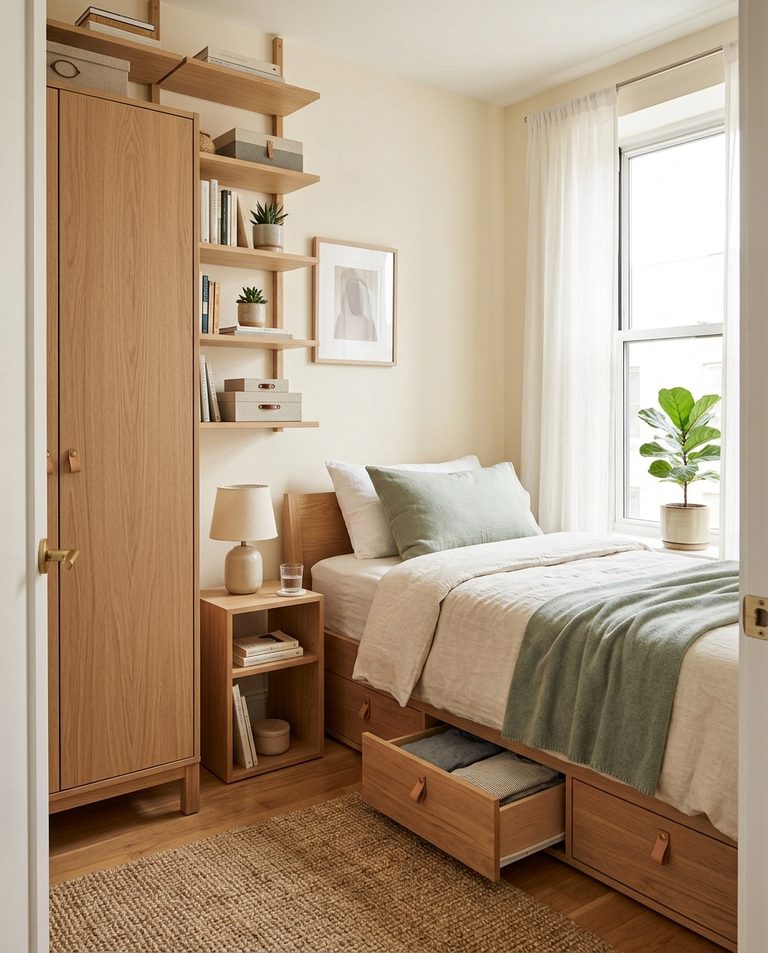
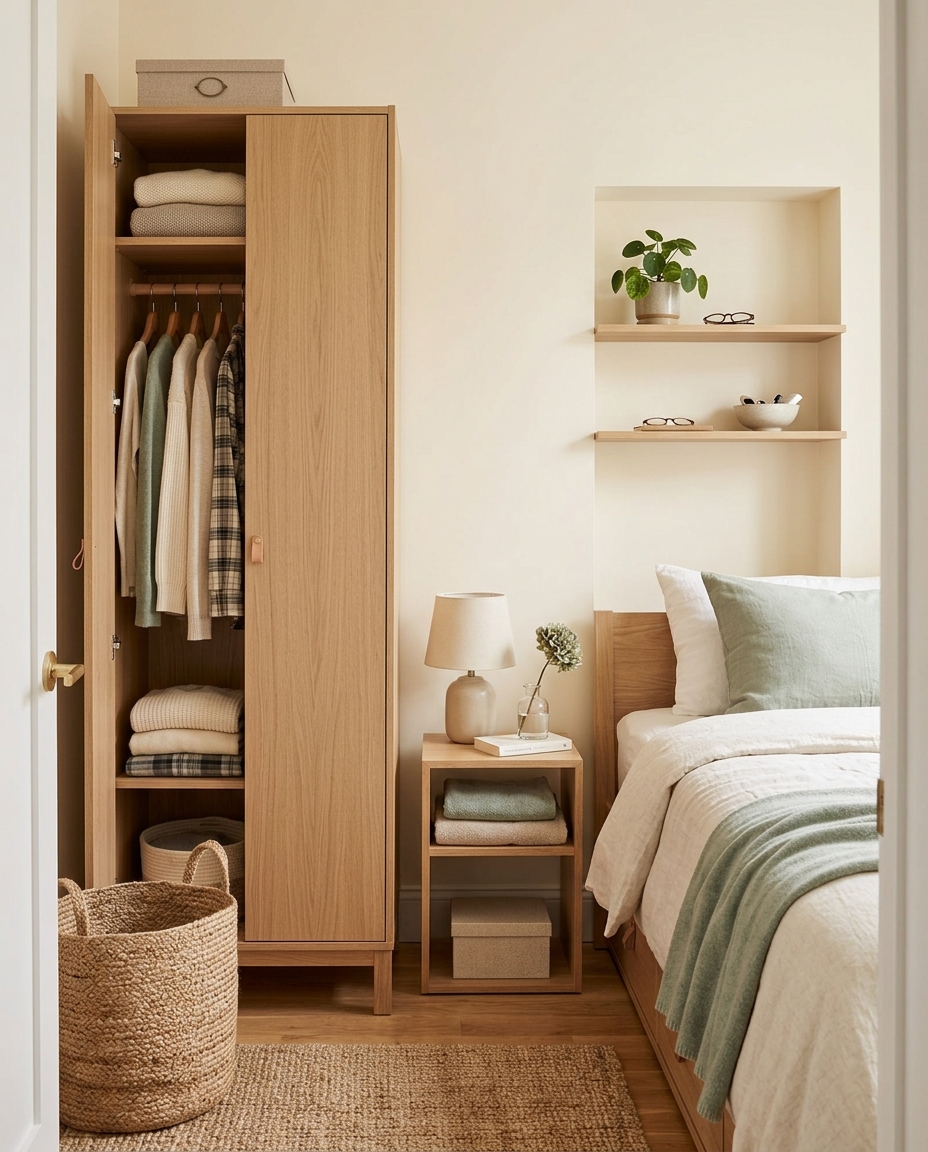
20 Small Bedroom Organization Ideas for a Calmer, More Functional Room
Table of Contents
A small bedroom can feel crowded surprisingly quickly. Clothes collect on chairs, shoes end up beside the bed, and everyday items can take over the nightstand or dresser.
The solution isn’t always adding more furniture. Effective small bedroom organization ideas start by giving the things you use most often a clear home and making that home easy to maintain.
Whether you live in a small apartment, a rental, or a compact bedroom in a larger home, these practical ideas can help you create a room that feels more comfortable without filling it with storage products.
20 Small Bedroom Organization Ideas
1. Start With the Floor
Before organizing drawers, closets, or shelves, clear the floor.
Pick up clothing, shoes, bags, boxes, and anything that doesn’t belong in the bedroom. Put each item where it belongs rather than simply moving everything onto another surface.
A clear floor immediately makes it easier to see which areas actually need organization.
2. Create Four Simple Decluttering Groups
You don’t need to empty the entire bedroom at once.
Work through one small area and divide items into four groups:
- Keep
- Move to another room
- Donate or give away
- Discard
Starting with one drawer, one section of the closet, or one corner makes the process less overwhelming.
3. Give Every Type of Clothing a Home
Clothing is often one of the biggest sources of bedroom clutter.
Decide where different types of clothing belong. Hanging pieces can stay in the closet, folded clothes can go into drawers, and frequently worn items should be stored somewhere convenient.
The system doesn’t need to be complicated. The best system is one you can actually maintain.
4. Replace the Bedroom Chair Clothing Pile
A chair can quickly turn into an unofficial closet.
If you regularly leave clothes on a chair, create another location for them. A few hooks, a designated section of the closet, or a laundry basket may work better.
Keeping the chair available for sitting can make the entire room feel more intentional.
5. Organize Your Closet Around Your Routine
You don’t need a perfectly color-coded closet.
Instead, arrange clothing according to how you actually use it. Keep frequently worn pieces in the easiest-to-reach areas and move seasonal or rarely worn clothing toward less accessible sections.
A closet that matches your routine is easier to use and easier to keep organized.
For more ideas, see Small Closet Organization Ideas.
6. Keep the Nightstand Minimal
Your nightstand doesn’t need to become a storage station.
Keep only the things you regularly use before bed or in the morning, such as a book, glasses, or charger.
Use the drawer for smaller items and keep the top surface relatively clear.
A simple nightstand can make the sleeping area feel noticeably calmer.
7. Give Each Drawer a General Purpose
Drawers become difficult to manage when everything is mixed together.
Instead of creating an overly detailed system, give each drawer a broad category.
For example:
- Underwear and socks
- T-shirts
- Sleepwear
- Accessories
- Personal items
Broad categories make it easier to find things without requiring complicated labels.
8. Keep the Dresser Top Under Control
The top of a dresser can quickly become another cluttered surface.
Choose a small area for everyday items such as jewelry, watches, or keys. A simple tray can keep these objects together.
Everything else should have another designated home.
Keeping one large surface clear can make a small bedroom look much more organized.
9. Make Better Use of Under-Bed Space
The area beneath the bed can provide valuable storage in a small bedroom.
Use it for specific categories such as:
- Seasonal clothing
- Extra bedding
- Shoes
- Rarely used accessories
Avoid turning the space into a place where random belongings disappear.
For more ideas, see Under Bed Storage Ideas.
10. Give Shoes a Dedicated Location
Shoes scattered around the floor can make a small bedroom feel even smaller.
Keep frequently worn pairs somewhere convenient and move less frequently used shoes into the closet or under-bed storage.
If shoes always end up beside the bed, consider moving their storage closer to where you naturally take them off.
Convenience often makes an organization system easier to maintain.
11. Create an Everyday Drop Zone
Small belongings can travel all over the bedroom if they don’t have a designated location.
Create one drop zone for things such as:
- Keys
- Wallet
- Watch
- Headphones
- Chargers
- Small accessories
This could be a tray, drawer, or small basket.
The exact location matters less than using the same place consistently.
12. Contain Chargers and Cables
Loose cables can create visual clutter even when the rest of the bedroom is tidy.
Keep frequently used chargers together and remove unnecessary cables from the nightstand.
A small cable organizer or container can keep cords contained without taking up much space.
13. Don’t Fill Every Empty Corner
An empty corner doesn’t automatically need furniture.
In a small bedroom, leaving some areas open can actually make the room feel more comfortable.
If a corner genuinely needs storage, choose something appropriately sized, such as a narrow shelf, small hamper, or wall hooks.
More furniture isn’t always better organization.
14. Give Laundry a Convenient Home
Laundry becomes difficult to manage when there is no obvious place for it.
Choose a hamper or basket and position it where you naturally change clothes.
If you usually change beside the bed, placing the hamper across the room may make the system inconvenient.
Organization works best when it follows your habits.
15. Keep the Main Walking Path Clear
You don’t need an empty floor, but the main path through the bedroom should remain easy to navigate.
Keep shoes, bags, boxes, and loose clothing off the walking area.
Use vertical or enclosed storage where practical, especially when floor space is limited.
A clear path can make a compact bedroom feel less crowded.
16. Simplify Open Shelving
Open shelves can be useful, but displaying too many individual objects can create visual clutter.
Group smaller belongings into a few baskets or containers.
You can also leave some empty space between groups of items rather than filling every shelf from edge to edge.
The goal is organized storage that still looks calm.
17. Install Hooks for Frequently Used Items
Hooks can provide simple storage for items such as:
- Robes
- Hats
- Bags
- Scarves
- Frequently worn accessories
Place hooks near the location where you naturally use the items.
If you’re renting, use an installation method that is suitable for the wall and permitted by your lease.
18. Create a Simple Bedtime Reset
Organization becomes much easier when you have a small daily routine.
Before going to bed, take a few moments to:
- Put clothes away
- Return items to their designated location
- Put shoes where they belong
- Clear obvious trash
- Reset the nightstand
You don’t need a long cleaning session. A consistent reset prevents small amounts of clutter from becoming a larger project.
19. Keep Everyday Items Within Easy Reach
Not everything needs to be stored in the most hidden location.
Things you use frequently should be easy to access. Seasonal clothing, spare bedding, keepsakes, and rarely used accessories can go higher up or farther back.
This simple principle can make closets, drawers, and shelves easier to use.
20. Remove Items That Don’t Belong in the Bedroom
Small bedrooms often become temporary storage areas for things from other parts of the home.
You may find dishes, paperwork, packages, books, or miscellaneous objects that have gradually accumulated.
Return these items to their proper rooms.
If this happens frequently, keep a small basket in the bedroom for things that need to be taken elsewhere during your daily reset.
Small Bedroom Organization Ideas for Different Areas
Different parts of the bedroom need different organization strategies.
Organizing a Small Closet
Start with clothing you actually wear.
Keep frequently used pieces accessible and move seasonal items to higher shelves or less convenient areas. Avoid filling every section simply because there is available space.
Organizing a Small Nightstand
Keep the top surface limited to everyday essentials.
Use drawers or a small container for chargers, accessories, and other small items.
Organizing a Small Dresser
Give each drawer a general category and avoid mixing unrelated belongings.
Keep the top surface mostly clear and use a small tray for items you reach for every day.
Organizing a Small Bedroom Floor
Focus on creating a clear walking path.
Shoes, bags, laundry, and miscellaneous objects should each have a designated home rather than remaining on the floor.
Small Bedroom Organization Ideas for Renters
You don’t need to make permanent changes to organize a rental bedroom.
Consider simple options such as:
- Freestanding shelves
- Storage baskets
- Under-bed containers
- Removable hooks
- Small drawer organizers
- Freestanding clothing racks
Always check the product instructions and your lease before installing anything on the walls.
How to Keep a Small Bedroom Organized
Creating an organization system is only the first step. Maintaining it is what keeps the room functional.
Try a simple weekly reset:
1. Clear the floor.
Return shoes, bags, and clothing to their proper locations.
2. Reset the surfaces.
Clear the nightstand and dresser.
3. Check the laundry.
Put away clean clothes and place dirty clothes in the hamper.
4. Return misplaced items.
Move anything that belongs in another room.
5. Remove new clutter.
Deal with packaging, receipts, and other items before they accumulate.
Small maintenance habits are usually easier to sustain than occasional major cleanups.
How to Choose Storage for a Small Bedroom
Before buying another organizer, consider whether you actually need more storage.
First ask:
- What items need a home?
- How often do I use them?
- Where do I naturally use them?
- Is there existing storage I haven’t used efficiently?
- Will the new storage take away valuable floor space?
A storage product should solve a specific problem.
If it simply gives you another place to put clutter, it may not improve the room.
Frequently Asked Questions
What are the best small bedroom organization ideas?
Start with decluttering, clear walking paths, dedicated homes for clothing and shoes, simple drawer categories, and better use of existing storage such as closets and under-bed space.
How do I organize a very small bedroom?
Focus on reducing unnecessary items first. Then use vertical and hidden storage, keep surfaces clear, and make sure frequently used belongings are easy to reach.
How can I organize a small bedroom without adding furniture?
Use the storage you already have more efficiently. Declutter drawers and closets, use under-bed space, add suitable hooks, group small items in containers, and create clear homes for everyday belongings.
How do I keep clothes from piling up on a chair?
Give worn clothing a specific location. A designated section of the closet, hooks, or a suitable clothing basket can work better than leaving clothes on the chair.
How should I organize a small bedroom closet?
Organize the closet around how you dress. Keep frequently worn clothing easy to reach and move seasonal or rarely used items toward higher or less accessible areas.
What should I store under my bed?
Under-bed storage can work well for seasonal clothing, extra bedding, shoes, and belongings you don’t need regularly. Keep categories separated so the space doesn’t become a random storage area.
How do I make a small bedroom feel less cluttered?
Reduce unnecessary belongings, keep the floor and main walking path clear, limit visible items on open shelves, and avoid filling every empty area with furniture or storage.
How often should I organize my bedroom?
A small daily reset combined with a more thorough weekly check can help prevent clutter from building up. The exact routine depends on how quickly your room becomes messy.
Final Thoughts
The most effective small bedroom organization ideas don’t require complicated systems or a room full of storage products.
Start by deciding what actually belongs in the bedroom. Then give clothing, shoes, laundry, chargers, and everyday belongings simple homes that fit naturally into your routine.
Use existing storage before adding more. Keep the floor and important surfaces clear, take advantage of under-bed space, and leave some areas intentionally open.
A well-organized small bedroom isn’t about fitting more things into less space. It’s about making the things you actually use easier to find, easier to put away, and easier to live with.