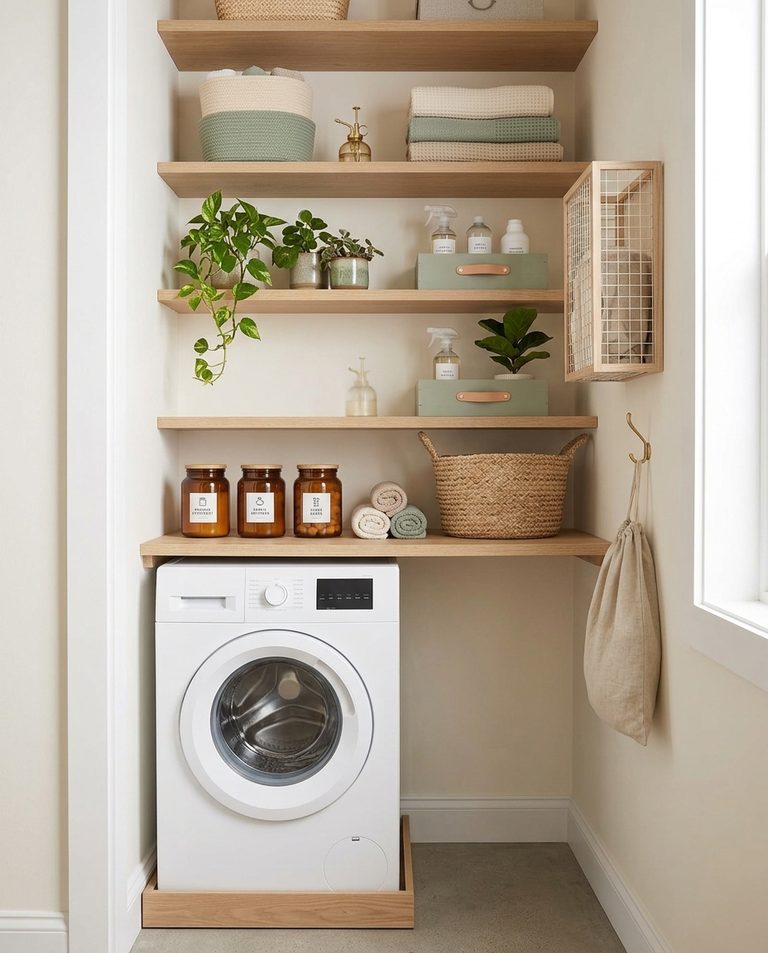
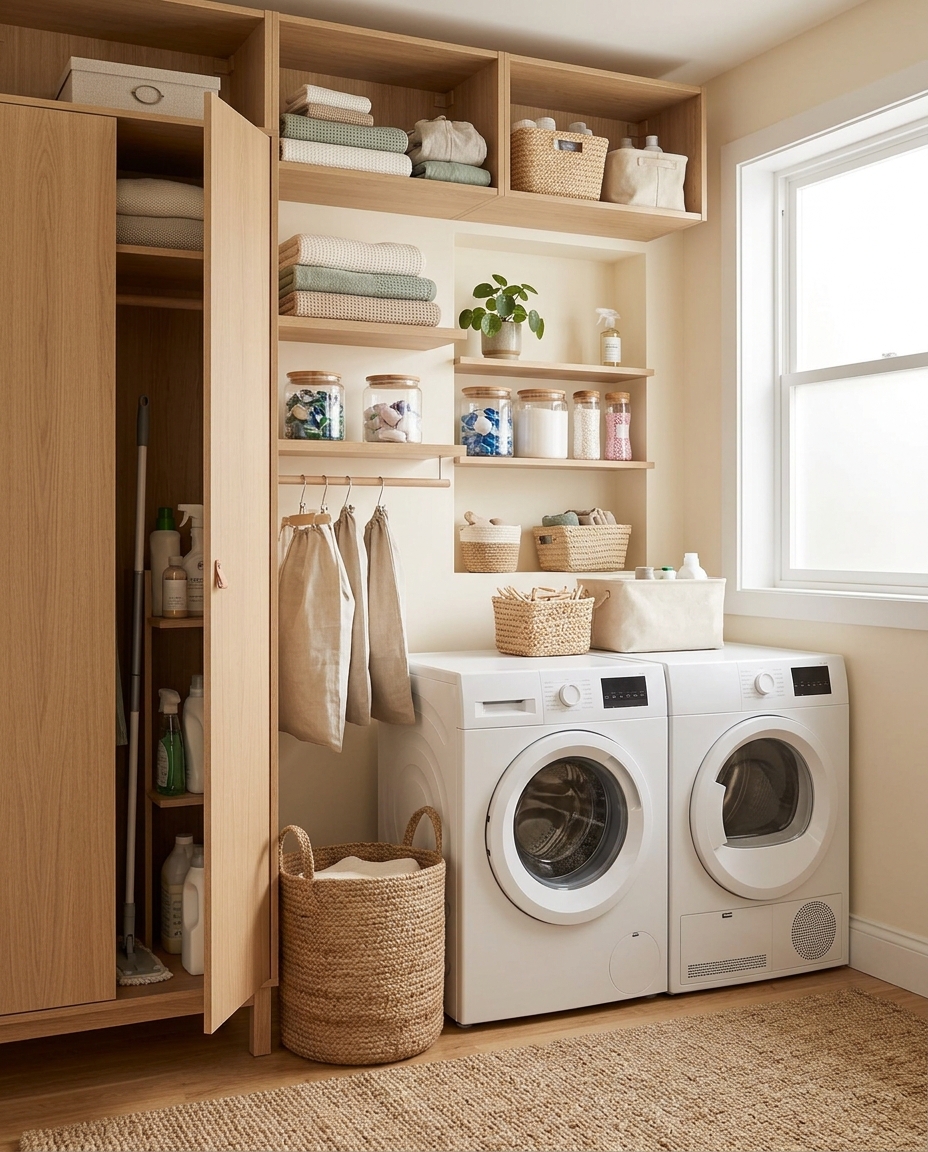
Small Laundry Room Organization Ideas
A small laundry room can get messy quickly. Detergent bottles take over the floor, baskets block the walkway, and clean clothes have nowhere to go. In a laundry closet, even a few misplaced items can make the whole space feel crowded.
The solution isn’t necessarily more storage. It’s using the space you already have more carefully.
Good small laundry room organization usually comes down to a few simple decisions: move supplies off the floor, use vertical space, keep everyday items within easy reach, and give everything a designated place. Even a narrow laundry area can work well when storage matches the way you actually do laundry.
Below are practical small laundry room organization ideas for laundry rooms, closets, apartments, and compact utility spaces.
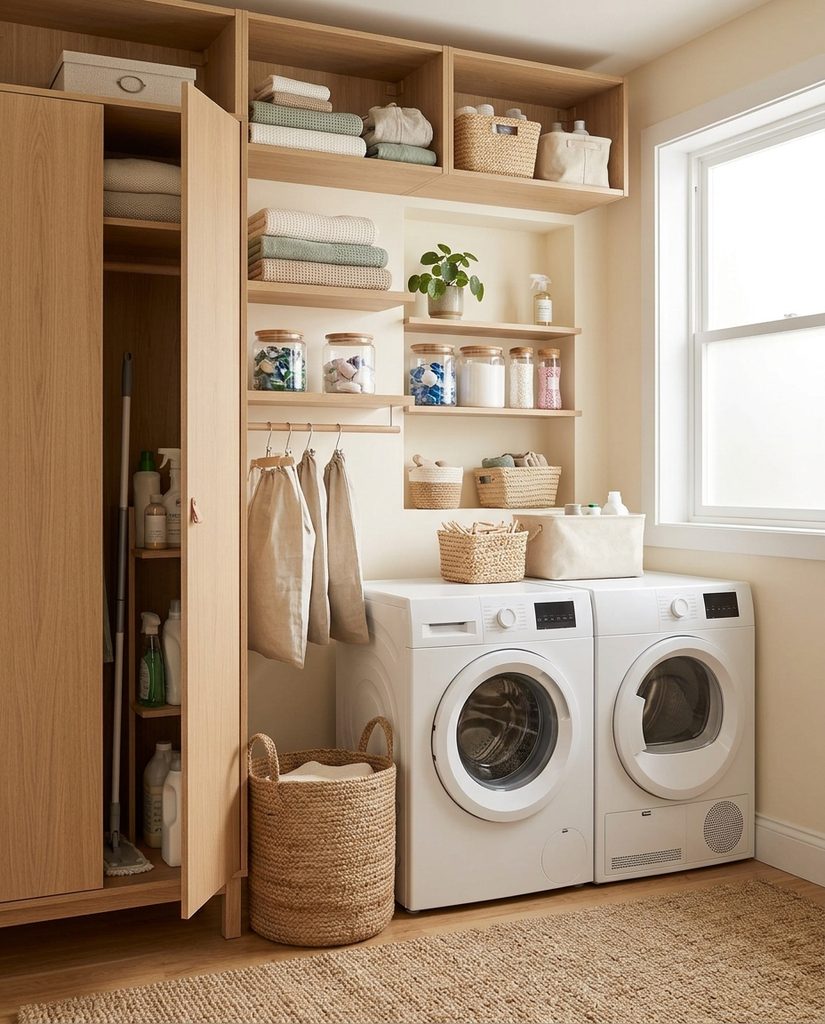
1. Use the Wall Above the Washer and Dryer
The wall above the machines is often one of the most useful areas in a small laundry room.
Install a shelf, shallow cabinet, or combination of both to store detergent, stain removers, dryer sheets, cleaning cloths, and other laundry supplies.
Keep frequently used items at a comfortable height rather than placing them on the highest shelf.
For renters, a freestanding shelving unit can provide similar storage without drilling into the wall.
Best for: Laundry rooms with empty wall space above front-loading machines.
2. Add a Narrow Shelf Between the Machines and Wall
If you have a small gap beside the washer or dryer, measure it before assuming it’s unusable.
A narrow rolling cart or slim shelving unit can fit into these spaces and hold smaller laundry supplies.
This works especially well for:
- Detergent
- Stain remover
- Cleaning cloths
- Small brushes
- Dryer balls
- Extra sponges
A slim cart is also easy to pull out when you need to clean behind it.
3. Install a Countertop Over Front-Loading Machines
If your washer and dryer are front-loading, the space above them can become a useful folding surface.
A countertop creates one continuous work area instead of leaving the tops of the machines unused.
Use the surface for folding clothes, sorting laundry, or temporarily placing clean items.
Try not to turn the countertop into permanent storage. Keeping most supplies underneath or on nearby shelves makes the room easier to use.
4. Choose Baskets That Fit the Space
Large laundry baskets can consume a surprising amount of floor space.
Instead of buying baskets first and trying to find somewhere to put them, measure the available area and choose containers that fit.
For example, narrow baskets may work better in a laundry closet, while stackable bins can make better use of a tall cabinet.
You can use separate baskets for:
- Lights
- Darks
- Towels
- Delicates
- Clean clothes waiting to be put away
If floor space is extremely limited, consider a collapsible laundry basket that can be stored when it isn’t needed.
5. Make Use of the Back of the Door
The back of a laundry room or closet door can provide valuable storage without taking up floor space.
An over-the-door organizer can hold smaller supplies such as stain-treatment products, cleaning brushes, clothespins, and laundry bags.
For renters, this can be particularly useful because many over-the-door organizers require no permanent installation.
Make sure the organizer doesn’t interfere with the door closing or with the operation of nearby appliances.
6. Use Vertical Storage From Floor to Ceiling
When floor space is limited, look upward.
A tall shelving unit can provide several levels of storage while taking up relatively little floor area.
Keep the items you use most often between waist and shoulder height. Less frequently used supplies can go higher.
Avoid placing heavy containers where you need to reach over your head. A step stool may also be necessary for high shelves, so consider whether the arrangement is practical before filling every available level.
7. Add a Cabinet for a Cleaner Look
Open shelving is convenient, but cabinets can make a small laundry area look less cluttered.
Use a cabinet for items you don’t want sitting in plain view, such as backup detergent, extra cleaning supplies, or miscellaneous household items.
If children or pets have access to the laundry area, cabinet storage can also help keep potentially harmful cleaning products out of easy reach. Use appropriate child-resistant storage where needed rather than relying on a cabinet alone.
Affiliate idea: If you genuinely need additional enclosed storage, a suitable storage cabinet can be linked with an [AFFILIATE PRODUCT LINK].
8. Turn a Laundry Closet Into a Vertical Storage Zone
Laundry closets require a slightly different approach because every inch matters.
Instead of trying to add large furniture, look for unused vertical areas around the machines.
Depending on the layout, you may be able to use:
- A narrow shelf above the machines
- An over-the-door organizer
- Slim rolling storage
- Wall-mounted hooks
- Small bins on existing shelves
- A foldable drying rack
Keep the center of the closet as clear as possible so you can open the appliance doors and move laundry in and out comfortably.
For more ideas specifically for this layout, see [Laundry Closet Organization Ideas].
9. Use Wall Hooks for Small Items
Hooks are inexpensive and useful in places where shelves would be too bulky.
Install or hang hooks for:
- Laundry bags
- Reusable shopping bags
- Dustpans
- Cleaning cloths
- Small drying items
- Items waiting to be repaired or treated
In a rental, removable hooks can provide additional storage without permanent changes to the wall, provided they are used according to the manufacturer’s instructions and the wall surface can support them.
10. Create a Dedicated Spot for Stain-Treatment Supplies
Stain removers tend to end up wherever there’s an empty spot.
Instead, create a small stain-treatment station.
A shallow bin can hold stain remover, a small laundry brush, and other supplies you use before washing.
Place it close enough to the washer that you can treat a garment immediately, but keep products stored securely and follow their labels.
A small container is often better than keeping several bottles spread across the room.
11. Keep Laundry Supplies in a Single Zone
One common organization problem is having detergent in one cabinet, stain remover on a shelf, and dryer supplies somewhere else.
Grouping related items makes laundry easier because you don’t have to search around the room.
A simple setup might be:
Daily supplies: detergent and commonly used treatment products
Laundry tools: brushes, bags, clips, and dryer accessories
Backstock: unopened supplies and less frequently used products
This approach also makes it easier to notice when you’re running low on something.
12. Use the Space Beside the Washer or Dryer
The small space beside an appliance is easy to overlook.
If there is enough clearance, a narrow shelving unit or rolling cart can turn that unused area into storage.
Before installing anything, make sure the storage doesn’t restrict appliance access, block vents, interfere with hoses, or make maintenance difficult.
Leave enough room to safely operate and service the machines according to their installation requirements.
13. Add a Small Drying Area
A traditional drying rack can be difficult to fit into a tiny laundry room.
Look for ways to create a temporary or fold-away drying area instead.
Depending on the room, this could be:
- A foldable drying rack
- A wall-mounted drying rack
- A retractable line
- A few appropriate hooks for lightweight items
Don’t block ventilation or place damp clothing where it will stay wet against a wall or enclosed surface for long periods.
Good airflow matters in a laundry area, especially when you’re regularly drying clothes indoors.
14. Use Bins Inside Cabinets and on Shelves
A large shelf can become difficult to manage when small items are scattered across it.
Use smaller bins to group similar supplies.
For example, one bin could hold laundry bags while another holds cleaning cloths and brushes.
Bins are especially useful on deep shelves because you can pull the entire container forward instead of reaching behind several bottles.
Choose containers that can be wiped clean easily.
15. Don’t Waste the Space Above a Doorway
If your laundry room has a little-used area above the door, it may be suitable for a shallow shelf.
This is best reserved for items you don’t need every day, such as extra towels, seasonal household supplies, or backup laundry products.
Because this storage is higher and less accessibl