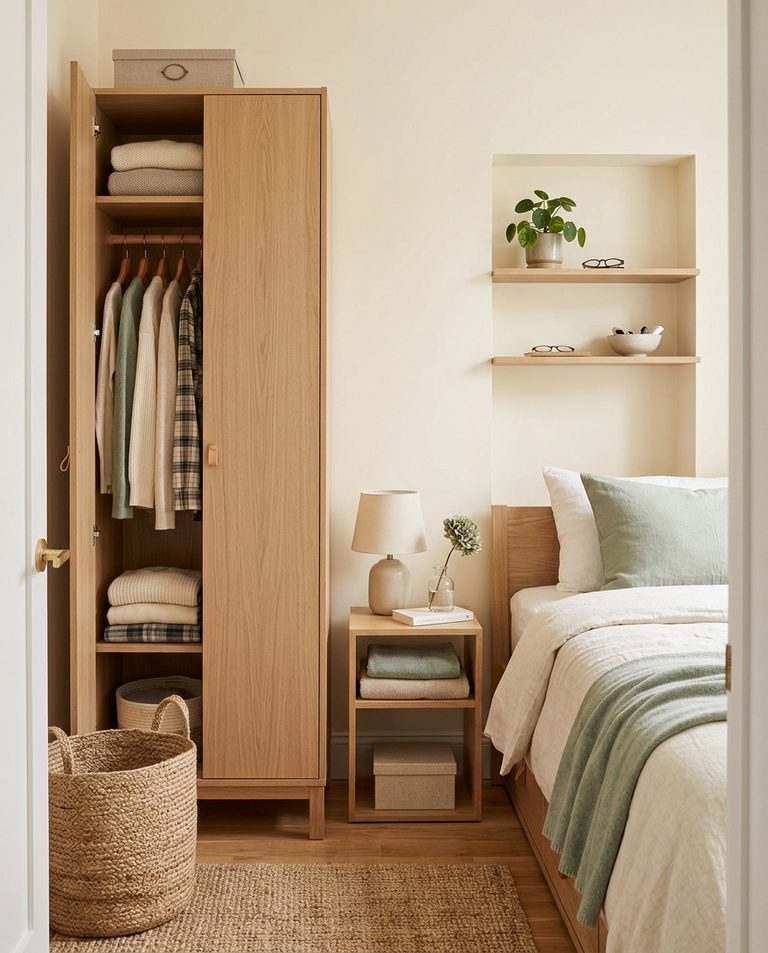
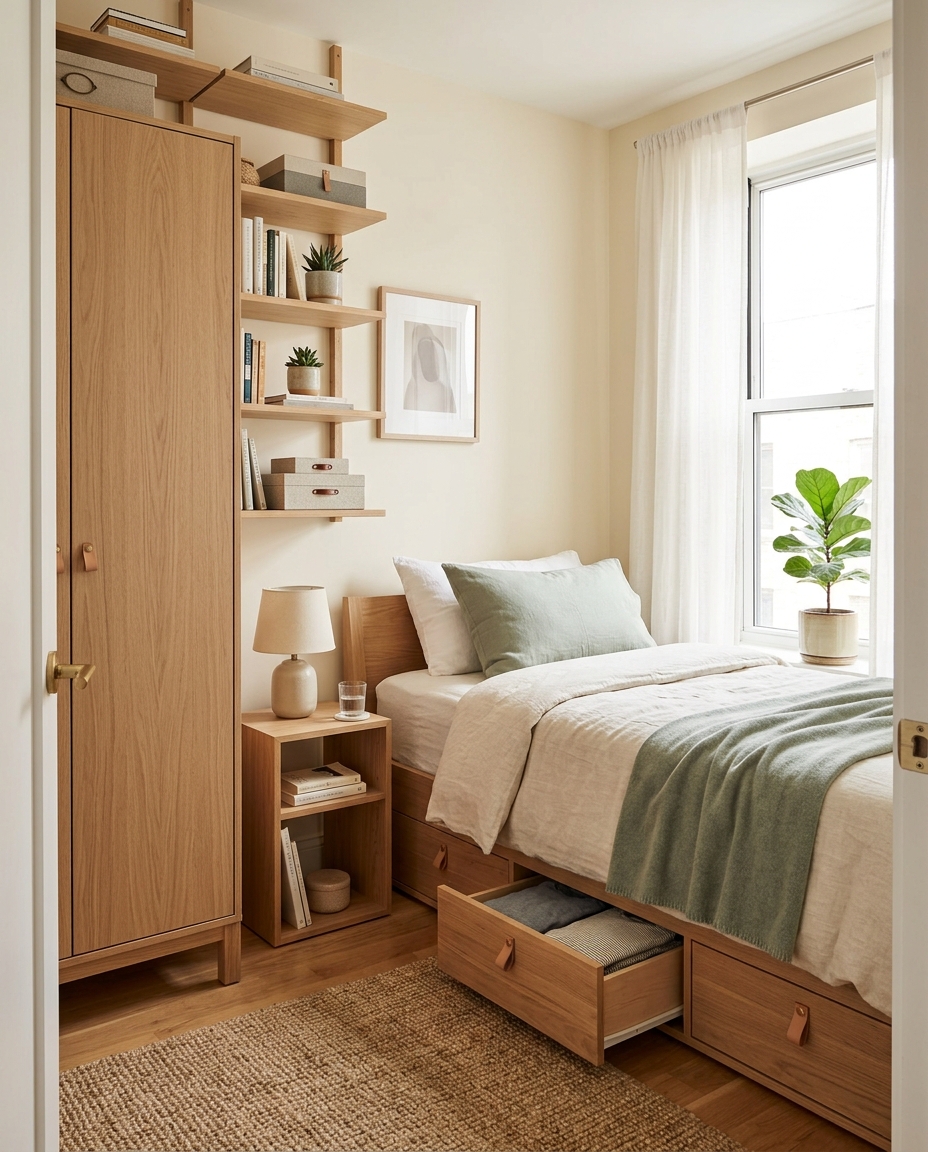
Small Bedroom Storage Ideas for More Space
Small Bedroom Storage Ideas
A small bedroom doesn’t give you much room for trial and error. Once clothes, shoes, bedding, books, and everyday belongings start piling up, even a reasonably organized room can feel crowded.
The solution isn’t always another dresser or a larger closet. In a small bedroom, some of the most useful storage comes from places that are easy to overlook: underneath the bed, above the door, inside the closet, behind the bedroom door, and on otherwise empty walls.
These small bedroom storage ideas focus on adding useful storage without filling the room with bulky furniture. Whether you’re working with a tiny bedroom in an apartment, a compact guest room, or a small primary bedroom, the goal is to make your belongings easier to store while keeping enough open space to actually enjoy the room.
1. Make Full Use of the Space Under the Bed
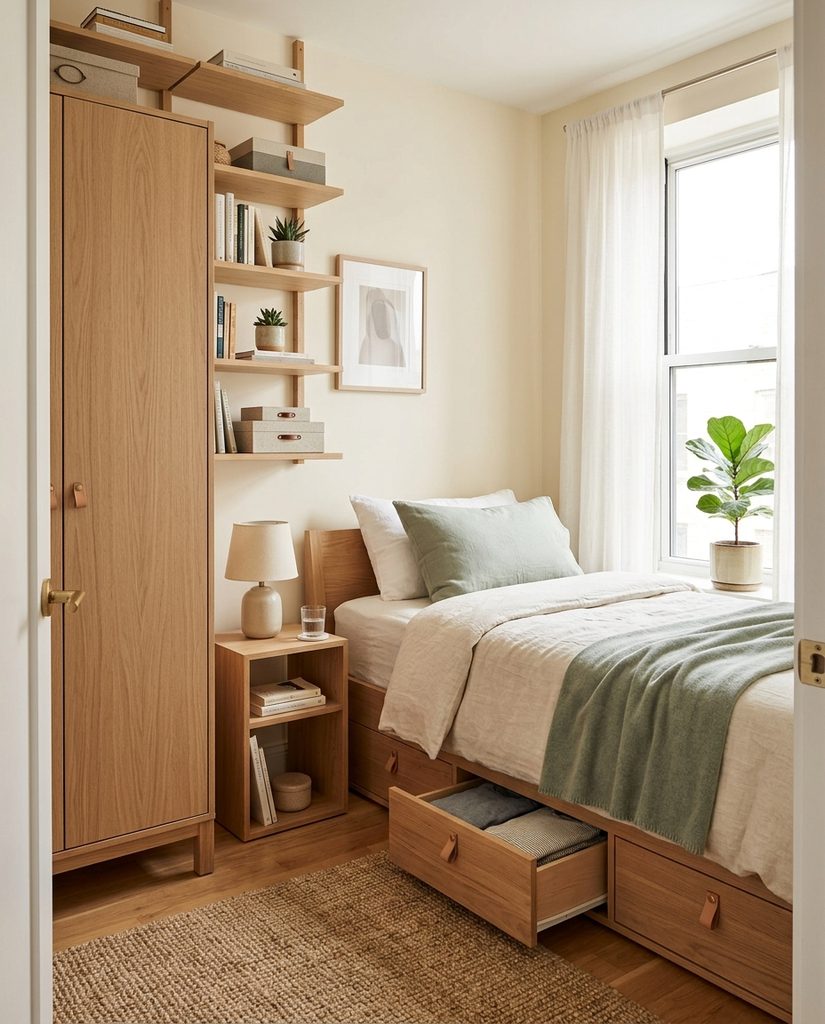
The space beneath the bed is one of the easiest places to add storage without taking up additional floor space.
Use low-profile containers or drawers for items you don’t need every day, such as seasonal clothing, spare bedding, shoes, or luggage accessories.
Keep frequently used items somewhere easier to reach. Under-bed storage works best for things that can stay packed away for a while.
Best for: Seasonal clothes, bedding, shoes, and less frequently used items.
Trade-off: The farther an item is pushed under the bed, the less convenient it becomes to retrieve. Dust can also be an issue, so use suitable containers.
For more ideas, see [Under Bed Storage Ideas].
2. Use the Full Height of the Closet
Many closets have empty space above the clothes rod or between the rod and the floor.
Add suitable shelving, stackable bins, or other organizers to make use of that vertical space.
Keep everyday clothing at an easy-to-reach height. Higher shelves are better for luggage, seasonal clothing, extra bedding, or items you don’t use regularly.
Best for: Clothes, shoes, bedding, bags, and accessories.
Trade-off: High storage becomes less accessible, so don’t put everyday items where you need a step stool to reach them.
3. Add a Second Hanging Rod
If your closet has enough vertical space, a second hanging rod can create another area for shorter clothing.
This can work particularly well for shirts, blouses, folded pants, or other garments that don’t need the full height of the closet.
Before installing anything, check the closet dimensions and make sure the existing layout can accommodate another rod.
Best for: Shirts, shorter garments, and frequently worn clothing.
Trade-off: Adding another rod reduces the available hanging height, so long dresses, coats, and similar garments may still need another location.
4. Use the Back of the Bedroom Door
The back of the bedroom door can become useful storage without taking up floor space.
An over-the-door organizer can hold shoes, accessories, scarves, small bags, or other lightweight items.
This is particularly helpful in an apartment bedroom where adding another piece of furniture may make the room feel cramped.
Best for: Shoes, accessories, scarves, small bags, and lightweight items.
Trade-off: Check the door clearance before buying. A bulky organizer can make the door harder to close or use.
5. Put a Narrow Dresser in an Unused Corner
A dresser doesn’t have to be wide to be useful.
If you have an empty corner, look for a narrow piece that fits the available footprint without blocking the walking path.
Use the drawers for clothing, accessories, or personal items that don’t need to stay on display.
Best for: Folded clothing, underwear, accessories, and personal belongings.
Trade-off: Even a narrow dresser takes up floor space, so measure the corner and walking clearance carefully.
6. Choose a Bed With Built-In Storage
If you’re replacing your bed anyway, consider a frame that includes drawers or another form of built-in storage.
This can combine two functions in one piece of furniture and reduce the need for a separate dresser or storage cabinet.
The trade-off is accessibility. Depending on the design and room layout, some storage compartments may be harder to access than ordinary drawers.
Best for: Bedding, seasonal clothing, shoes, and larger items.
Trade-off: Built-in storage can be less flexible if you rearrange the room later.
7. Add Floating Shelves to Empty Walls
An empty wall can provide storage without taking up floor space.
Floating shelves can hold books, small baskets, framed items, accessories, or a few everyday belongings.
Keep frequently used items on the lower shelves and less important items higher up.
Best for: Books, baskets, accessories, and small personal items.
Trade-off: Open shelving puts everything on display and can add visual clutter if it’s packed too tightly.
For a rental, check whether drilling is allowed before installing shelves.
8. Use the Space Above the Bedroom Door
The wall above the bedroom door is easy to ignore because it isn’t at eye level.
A shallow shelf can provide a place for books, extra bedding, bags, or other items that aren’t needed every day.
This works best when the shelf is easy enough to access safely and doesn’t interfere with the door.
Best for: Books, storage boxes, bags, and seasonal items.
Trade-off: High shelves aren’t suitable for things you use frequently.
9. Use a Storage Bench at the Foot of the Bed
If there is enough space at the foot of the bed, a storage bench can provide both seating and hidden storage.
Use the interior for blankets, extra pillows, shoes, or other items that would otherwise need a separate storage area.
In a very small room, however, the bench can reduce the walking space around the bed.
Best for: Blankets, pillows, shoes, and seasonal items.
Trade-off: It uses valuable floor space, so measure the distance between the bed and nearby walls or furniture first.
10. Make Your Nightstand Work Harder
A nightstand can provide more storage than its top surface suggests.
Choose one with drawers or a lower shelf if you need additional space. Use the drawer for small personal items and the lower shelf for books or a small basket.
Try not to turn the nightstand into a storage pile. Keeping the top relatively clear makes the room feel less crowded.
Best for: Books, chargers, glasses, personal items, and small accessories.
Trade-off: A larger nightstand provides more storage but can make the area around the bed feel tight.
11. Use a Tall, Narrow Wardrobe
If your bedroom doesn’t have enough closet space, a tall wardrobe can add hanging and shelf storage while using relatively little floor width.
This can be particularly useful in older apartments or rooms with limited built-in closet storage.
Use the hanging section for clothing and the shelves for folded items, shoes, or accessories.
Best for: Clothes, shoes, bags, and folded garments.
Trade-off: Tall furniture can dominate a small room visually, so choose a size that fits the room rather than simply buying the largest wardrobe available.
12. Store Shoes Vertically
Shoes can quickly spread across the floor, especially when there isn’t a dedicated closet.
A vertical shoe organizer, narrow shelf, or suitable hanging organizer can keep pairs together while reducing the amount of floor space they occupy.
Keep the shoes you wear most often easiest to reach.
Best for: Everyday shoes, sneakers, flats, and smaller footwear.
Trade-off: Some shoe organizers are difficult to clean, especially when placed near the floor. Choose something you can easily wipe or remove.
13. Use the Side of a Wardrobe or Dresser
If the side of a large piece of furniture is exposed, it may provide a small amount of additional storage.
Hooks or a slim orga