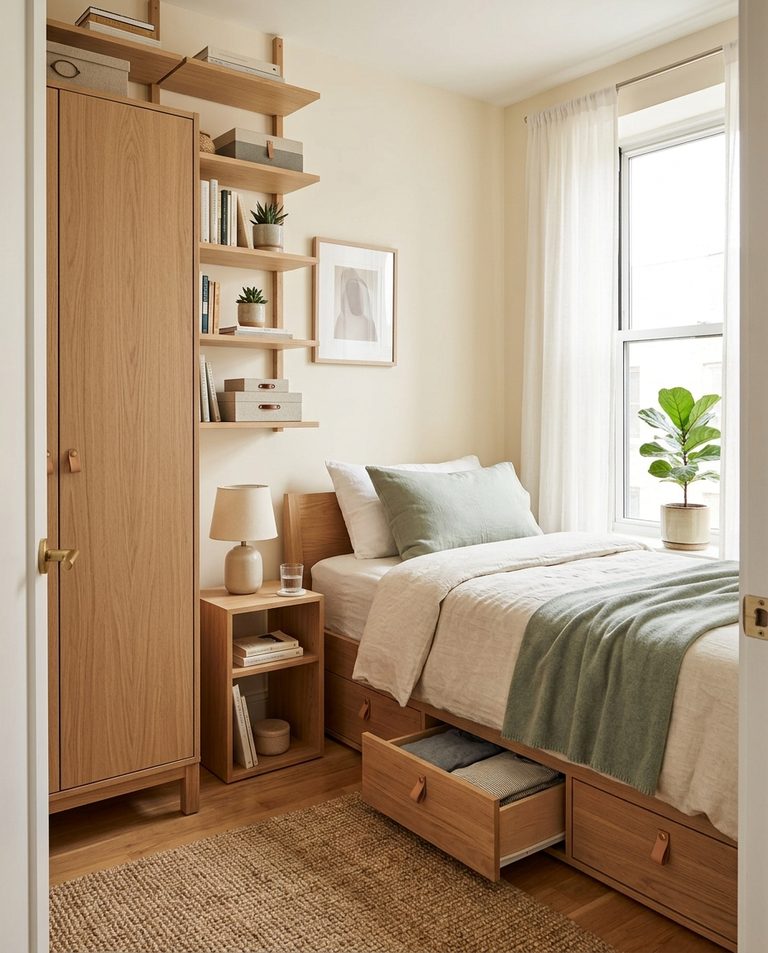
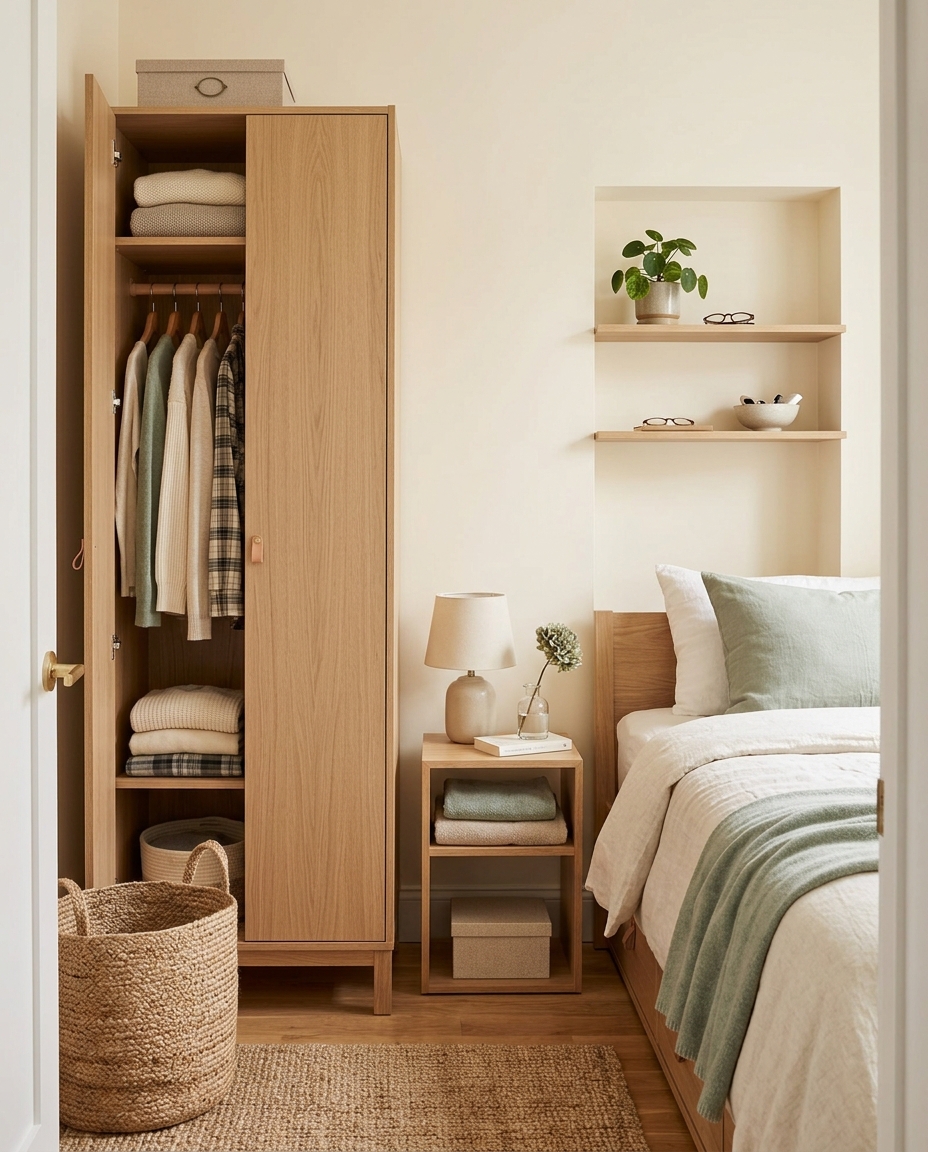
Small Bedroom Organization Ideas That Work
Small Bedroom Organization Ideas
A small bedroom can become cluttered quickly. A chair becomes a place for clothes, the nightstand collects everything from chargers to receipts, and the floor slowly disappears under shoes and bags.
The problem isn’t always a lack of storage. Often, it’s that too many things don’t have a clear place to go.
Good small bedroom organization ideas should make the room easier to use, not turn it into a complicated system of bins and containers. The goal is to reduce the number of things competing for your attention, give everyday belongings a consistent home, and make putting things away simple enough to keep doing.
Whether you’re organizing a small bedroom in a house, apartment, condo, or rental, these practical methods can help you get the room under control and keep it that way.
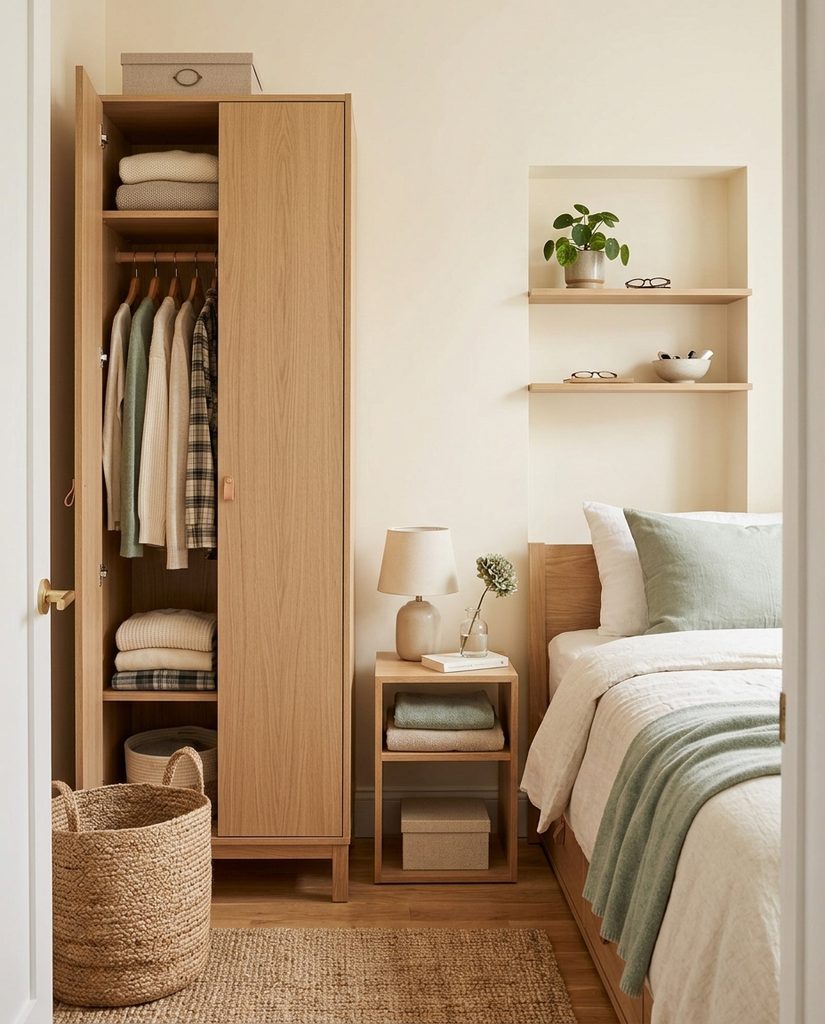
1. Start With a Quick Bedroom Reset
Before organizing anything, remove the obvious clutter.
Pick up clothes from the floor, clear the nightstand, return items that belong in other rooms, and throw away obvious trash.
Don’t worry about creating the perfect system yet. The purpose of this first pass is to make the room easier to see.
Once the surfaces and floor are reasonably clear, you’ll have a better idea of what actually needs organizing.
Why it works: You can’t organize a room effectively when you’re trying to sort belongings around piles of unrelated items.
2. Use a Simple Decluttering Method
You don’t have to empty the entire bedroom at once.
Work through one area at a time and sort items into four basic groups:
- Keep
- Move somewhere else
- Donate or give away
- Discard
Start with an easy area such as the floor, nightstand, or one drawer.
Avoid getting stuck on difficult decisions. If you’re unsure about something, set it aside and continue with the easier items.
Why it works: Breaking the job into smaller areas makes the process more manageable and prevents the entire bedroom from becoming a giant sorting pile.
3. Give Everyday Clothes a Clear Home
Clothing is often the biggest source of bedroom clutter.
Decide where each type of clothing belongs. Hanging clothes can stay in the closet, folded clothes can go in drawers, and frequently worn items should be stored where they’re easy to reach.
Don’t create a complicated folding system if you won’t maintain it.
Why it works: When clothes have predictable homes, you’re less likely to leave them on a chair or the floor simply because putting them away feels like extra work.
4. Stop Using the Chair as a Closet
A bedroom chair can quickly become a clothing pile.
If you regularly place worn-but-not-dirty clothes on a chair, give them a specific location instead. A few hooks, a designated section of the closet, or a simple clothing basket may work better.
Keep the chair available for sitting rather than treating it as temporary storage.
Why it works: It removes one of the easiest places for clutter to accumulate.
5. Organize the Closet by How You Use It
You don’t necessarily need a perfect color-coded closet.
Instead, group clothes in a way that makes sense for your routine. You might keep work clothes together, casual clothes in another section, and less frequently worn pieces toward the side or back.
Seasonal items can move to less accessible areas when they’re not needed.
Why it works: A closet organized around how you dress makes it easier to find things and easier to put them back.
For more detailed ideas, see [Small Closet Organization Ideas].
6. Keep the Nightstand Simple
A nightstand doesn’t need to store everything you might need someday.
Keep only the items you regularly use before bed or first thing in the morning. Depending on your routine, that might include a book, glasses, charger, or a small personal item.
Use the drawer for smaller belongings rather than allowing the top to become a catch-all surface.
Why it works: A clear nightstand makes the sleeping area feel calmer and prevents small objects from spreading across the room.
7. Give Every Drawer a Basic Category
Drawers become difficult to use when unrelated things get mixed together.
You don’t need elaborate labels. Just give each drawer a general purpose.
For example:
- Underwear and socks
- T-shirts
- Sleepwear
- Accessories
- Personal items
If a drawer contains several unrelated categories, consider whether some items belong somewhere else.
Why it works: Broad categories make it easier to find things without requiring a complicated organizing system.
8. Clear the Top of the Dresser
The top of a dresser can become another version of a junk drawer.
Instead of allowing receipts, accessories, bottles, chargers, and random objects to accumulate, decide what actually belongs there.
A small tray can contain everyday items such as jewelry, a watch, or keys.
Everything else should have another home.
Why it works: Keeping one large surface under control makes the whole room look more organized without requiring additional storage.
9. Use the Space Under the Bed Intentionally
Under-bed storage can be useful, but it shouldn’t become a hiding place for everything you don’t know where to put.
Use it for specific categories such as seasonal clothing, extra bedding, shoes, or items you don’t need regularly.
Keep similar things together and use containers if they help protect or contain the contents.
Why it works: It uses existing space without adding another piece of furniture.
For more ideas, see [Under Bed Storage Ideas].
10. Give Shoes a Defined Home
Shoes scattered around the bedroom make the floor look cluttered very quickly.
Keep the pairs you wear most often somewhere easy to reach. Less frequently worn shoes can go in the closet, under the bed, or in another suitable storage area.
If shoes regularly end up beside the bed, move their storage closer to where you naturally take them off.
Why it works: The easiest storage location is often the one you’ll actually use consistently.
11. Create a Drop Zone for Everyday Items
Small items such as keys, wallets, watches, headphones, and chargers can easily move around the bedroom.
Create one small drop zone for them.
It could be a tray on the dresser, a drawer, or a small basket. The location matters less than using the same place consistently.
Why it works: A designated drop zone prevents small objects from spreading across multiple surfaces.
12. Deal With Cords and Chargers
Loose cords can make a small bedroom look messy even when everything else is organized.
Gather chargers in one location and avoid keeping cables you don’t currently need on the nightstand.
A small cable organizer or simple container can keep frequently used cords together.
Why it works: Containing small visual distractions can make surfaces look much cleaner.
13. Use Corners Without Filling Them With Furniture
An empty corner doesn’t automatically need a dresser or shelf.
Sometimes the best organization solution is to leave it empty.
If the corner genuinely needs to hold something, choose a narrow shelf, hamper, hook rail, or other appropriately sized solution.
Why it works: Keeping some open space prevents a small bedroom from feeling packed with furniture.
14. Give Laundry Its Own Home
Laundry becomes clutter when there’s no obvious place for it.
Use a hamper or laundry basket and put it somewhere that makes sense based on your routine.
If you usually change clothes beside the bed, don’t put the hamper across the room simply because the location looks better.
Why it works: Storage works better when it follows your habits instead of fighting them.
15. Keep the Floor as Clear as Possible
You don’t need a completely empty floor, but loose belongings should have a home.
Shoes, bags, clothing, boxes, and miscellaneous items can make a small bedroom feel much more crowded than it actually is.
Try to keep the main walking path clear and use vertical or enclosed storage where practical.
Why it works: An unobstructed floor makes the room easier to move through and reduces the feeling of clutter.
16. Reduce Visual Clutter on Open Shelves
Open shelving can look attractive, but too many visible items can make a small bedroom feel busy.
Group smaller belongings into a few baskets or containers rather than spreading individual objects across every shelf.
Leave some empty space instead of filling every available inch.
Why it works: Fewer visible objects create a cleaner visual field without requiring you to get rid of everything.
17. Use Hooks for Items You Reach for Often
Hooks can be useful for robes, hats, bags, scarves, or frequently worn items.
Place them where the items naturally get used, but avoid covering every wall with hanging belongings.
For renters, choose an installation method that’s appropriate for the wall and permitted by your lease.
Why it works: Hooks make it easy to put away items that don’t need to be folded or placed in a drawer.
18. Create a Simple Bedside Routine
Organization is easier to maintain when the room has a small daily reset.
Before going to bed, put clothes in their proper location, return items to the nightstand or drawer, place shoes where they belong, and clear obvious trash.
This doesn’t need to take long. The important part is doing the same few things consistently.
Why it works: Small regular resets prevent clutter from building into a larger organizing project.
19. Keep Frequently Used Items Accessible
Don’t hide everyday belongings in the hardest-to-reach storage.
Things you use regularly should be easy to access. Seasonal clothing, spare bedding, keepsakes, and rarely used accessories can go higher up or farther back.
This applies to closets, dressers, shelves, and under-bed storage.
Why it works: Organization becomes much easier to maintain when putting something away is convenient.
20. Remove Things That Don’t Belong in the Bedroom
A small bedroom often becomes temporary storage for things from other parts of the home.
Books that belong elsewhere, dishes, paperwork, packages, and miscellaneous objects can quietly accumulate.
Keep a small basket nearby if you tend to collect these items. During your daily reset, return everything to its proper room.
Why it works: It keeps the bedroom focused on the things you actually need there.
A Simple Step-by-Step Bedroom Organization Method
If your bedroom is currently overwhelming, don’t try to fix everything at once.
Step 1: Clear the floor
Pick up clothing, shoes, bags, trash, and anything