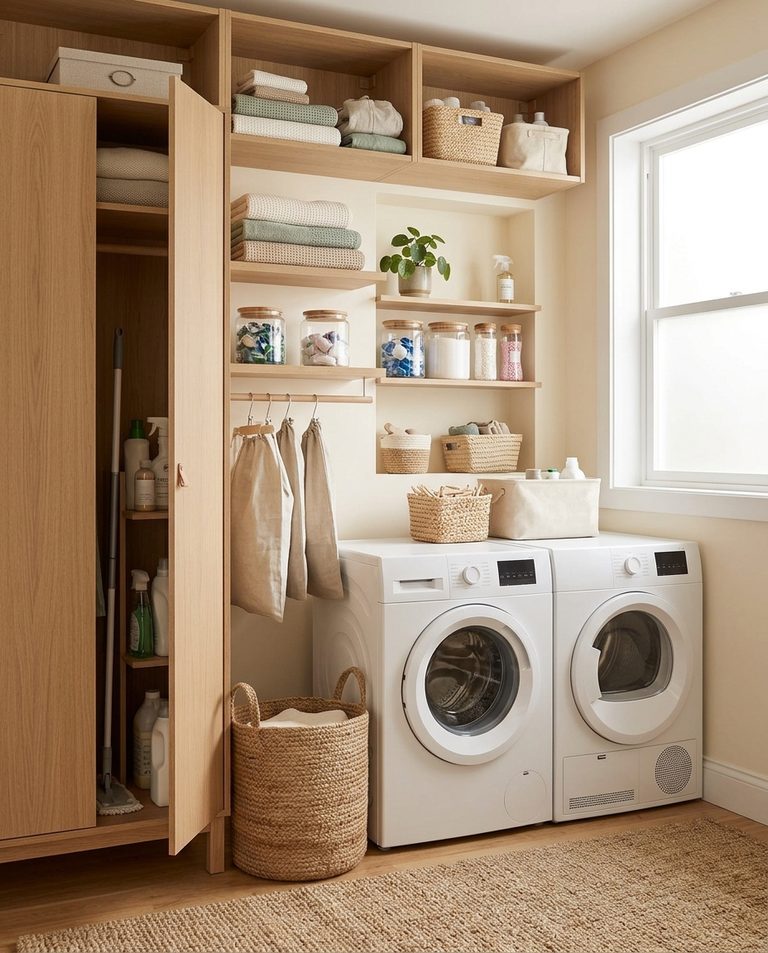
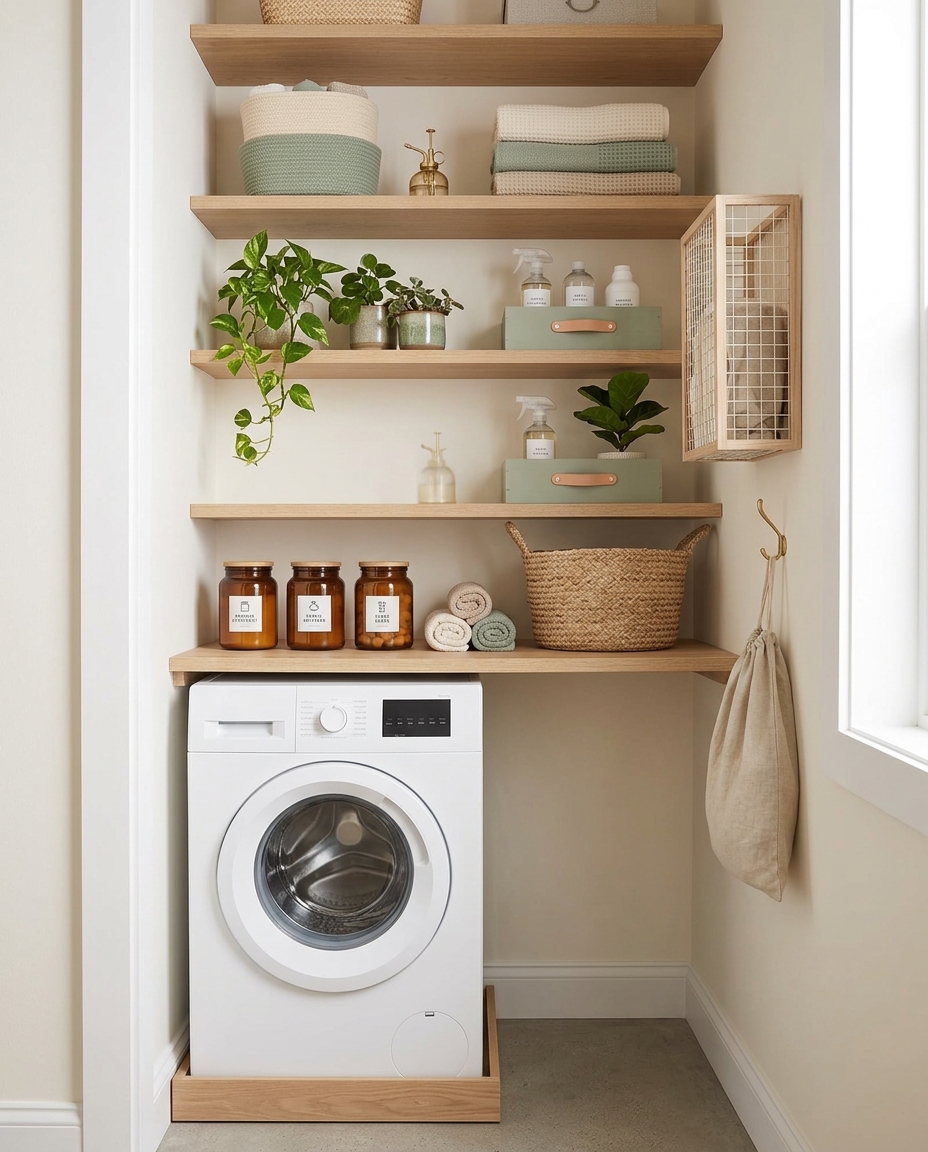
Small Laundry Room Storage Ideas That Work
Small Laundry Room Storage Ideas
Storage is usually the first thing a small laundry room runs out of.
A couple of detergent bottles, a basket of dirty clothes, cleaning supplies, and a few household extras can quickly take over the available floor and counter space. In a laundry closet, the problem is even more noticeable because there may only be a narrow strip of usable space around the machines.
The answer isn’t always a larger cabinet or a complete renovation. Good small laundry room storage often comes from using overlooked areas: the wall above the washer and dryer, the back of a door, narrow gaps beside appliances, and vertical space that would otherwise sit empty.
Here are practical ways to add more laundry room storage while keeping the space accessible and easy to maintain.
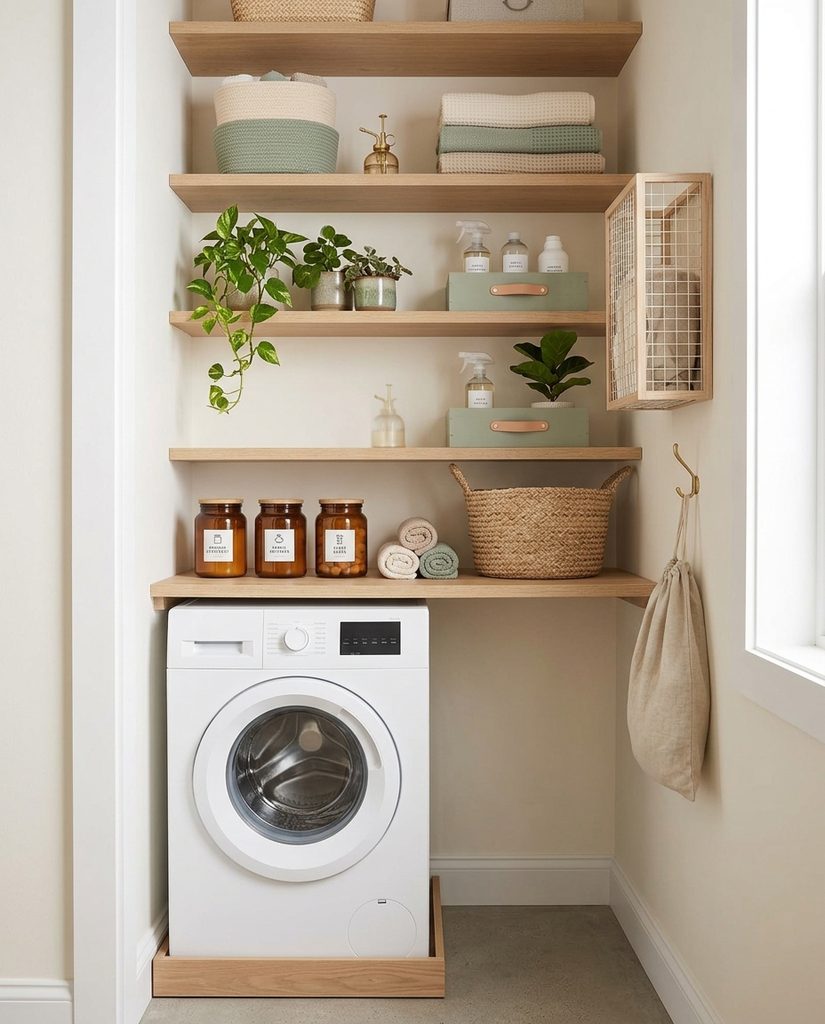
1. Install Shelving Above the Washer and Dryer
The wall above the washer and dryer is one of the easiest places to add storage in a small laundry room.
A shelf can hold everyday laundry supplies such as detergent, stain removers, dryer accessories, laundry bags, and cleaning cloths.
Open shelving also keeps frequently used items visible, so you don’t have to open a cabinet every time you start a load.
The limitation is that open shelves can look cluttered if too many different products are placed on them. Use a few simple baskets or bins to group smaller items.
2. Use a Tall, Narrow Shelving Unit
If your laundry room has more vertical space than floor space, a tall shelving unit can make better use of the room.
Look for a narrow design that fits along an empty wall or beside the appliances.
Use the lower shelves for heavier or frequently used items and reserve the higher shelves for things you don’t need every day.
This type of laundry shelving works particularly well in utility rooms where a full-size cabinet would take up too much floor space.
3. Add a Cabinet Above the Machines
Open shelves aren’t the only option.
A wall cabinet above the washer and dryer can provide enclosed laundry room storage for detergent, cleaning products, spare supplies, and other items you don’t want visible.
Cabinet doors also help create a cleaner appearance when the laundry area is part of a kitchen, hallway, bathroom, or other visible space.
Before installing one, make sure the cabinet doesn’t interfere with appliance controls, ventilation, hoses, or access needed for maintenance.
4. Use the Space Beside the Washer or Dryer
Even a narrow gap beside an appliance may be useful.
A slim rolling cart or narrow shelving unit can hold smaller supplies that would otherwise end up on the floor.
Depending on its size, this space can store:
- Detergent
- Stain-treatment products
- Laundry brushes
- Dryer accessories
- Cleaning cloths
- Small household supplies
Don’t choose storage based only on the width of the gap. Check the depth as well, and make sure the cart doesn’t make the walkway difficult to use.
5. Try a Rolling Laundry Cart
A rolling cart can be particularly useful when you need storage that can move.
You can pull it out when loading laundry, move it aside when cleaning, or use it as temporary storage while sorting clothes.
A narrow cart can fit beside a washer, dryer, cabinet, or wall.
For a specific awkward gap, a suitable rolling cart may be worth considering through an [AFFILIATE PRODUCT LINK].
The main limitation is that a cart still needs enough clearance to roll out. If there isn’t enough space to move it, fixed shelving may work better.
6. Turn the Back of the Door Into Storage
The back of a laundry room or closet door is easy to overlook.
An over-the-door organizer can create several small compartments for items such as stain removers, laundry bags, cleaning cloths, brushes, and other lightweight supplies.
This is particularly useful for laundry closets because it adds storage without reducing the floor area around the machines.
Check the organizer’s dimensions before buying and make sure the door can still open and close properly.
7. Add Wall-Mounted Hooks
Not everything needs a shelf.
A few wall hooks can hold laundry bags, reusable bags, small drying accessories, cleaning tools, or items waiting to be washed.
Hooks are also useful underneath a shelf where a full storage cabinet wouldn’t fit.
For renters, removable hooks may be an option if they’re appropriate for the wall surface and the weight of the items being stored.
8. Use Stackable Bins Inside Cabinets
A cabinet can have plenty of capacity but still be difficult to organize if small items are scattered across deep shelves.
Stackable bins can divide the available space into smaller sections.
Use them for:
- Extra laundry supplies
- Cleaning cloths
- Small tools
- Delicates bags
- Seasonal items
- Household supplies
Choose bins that can be pulled forward easily. A container that’s difficult to access will eventually become a place where unused items accumulate.
9. Create Storage Above a Countertop
If your laundry room has a countertop, don’t overlook the wall above it.
A shelf or shallow cabinet can turn the vertical space into additional storage while leaving the countertop available for folding clothes.
This arrangement works especially well when the counter sits beside or above the machines.
Keep the counter itself relatively clear. A folding surface becomes much less useful when it is permanently covered with laundry products.
10. Install a Countertop Over Front-Loading Machines
Front-loading washers and dryers can provide an opportunity for a useful work surface.
A properly planned countertop over the machines creates space for folding and sorting laundry while also making the room feel more organized.
You can then move smaller supplies to shelving above the counter instead of using the countertop as storage.
Make sure any countertop arrangement allows appropriate access to the machines and does not interfere with installation requirements.
11. Use the Space Above the Door
A shallow shelf above the laundry room door can provide storage for items you rarely need.
This might include:
- Backup laundry supplies
- Seasonal household items
- Extra cleaning cloths
- Infrequently used laundry accessories
Because this area is high, it’s not suitable for heavy containers or products you use every day.
If you need a step stool to reach it, keep that accessibility issue in mind before assigning the space an important storage function.
12. Use the Top of Existing Shelves More Efficiently
Sometimes you don’t need another piece of furniture. You simply need to use existing storage better.
If a shelf has a lot of unused vertical space above the items sitting on it, add a smaller stackable bin or shelf riser.
This can create another level for lightweight supplies.
The goal isn’t to pack every inch. Leave enough room to remove containers without having to move several other things first.
13. Store Laundry Baskets Where They Don’t Block the Floor
Laundry baskets can consume some of the most valuable floor space in a compact laundry room.
If possible, store them beneath a counter, inside an open shelving unit, or in a dedicated vertical section.
In very narrow spaces, a collapsible basket can be useful because it can be folded away when empty.
For apartments and laundry closets, choosing a basket based on the available storage space rather than its appearance can make a noticeable difference in everyday use.
14. Use a Narrow Shelf Between Appliances and Walls
Some laundry rooms have a small amount of unused wall space beside the appliances.
A shallow shelf can turn this otherwise awkward area into storage.
Use it for small items rather than large bottles that might extend into the walkway.
Before installing anything, check where water connections, electrical components, hoses, and other appliance-related elements are located. Storage should never interfere with safe appliance operation or maintenance.
15. Add a Fold-Down or Foldable Drying Area
Drying racks can be difficult to store in a small laundry room.
Instead of keeping a large rack permanently open, consider a foldable or wall-mounted option that can be put away when you’re finished.
This is especially useful in a laundry closet where floor space is already limited.
Don’t place damp clothing where it blocks ventilation or remains pressed against walls or other surfaces for extended periods.
16. Give Cleaning Supplies Their Own Storage Zone
Laundry rooms often become storage areas for every household cleaning product.
That can make the space difficult to navigate.
Give cleaning supplies their own shelf, cabinet section, or bin instead of mixing them with laundry products.
For example, one cabinet could contain everyday laundry products while a separate bin holds cleaning cloths and household cleaning tools.
Keep products stored according to their labels and away from children and pets.
17. Use a Small Cabinet in an Unused Corner
If your laundry room has an empty corner, a compact cabinet may provide more useful storage than several individual containers.
A cabinet can hide backup supplies and less attractive household items while keeping them accessible.
Choose the size carefully. A cabinet that makes the room difficult to walk through isn’t worth the additional storage.
In a very small laundry room, preserving clear access to the machines should take priority over maximizing cabinet capacity.
18. Create a Dedicated Shelf for Backstock
Running out of detergent is inconvenient, but storing too much of it can create another problem.
Give backup supplies one designated location rather than spreading them throughout the laundry room.
A single shelf or cabinet section can hold unopened products until they’re needed.
This also makes it easier to see what you already have before buying more.
For laundry products, consider weight when deciding where backstock belongs. Heavy containers are better kept at a comfortable lifting height rather than on a high shelf.
Small Laundry Closet Storage Ideas
Laundry closets often have less flexibility than separate laundry rooms.
You may have just enough width for the machines, leaving the walls and door as your main storage opportunities.
Start with the vertical areas.
A shelf above the machines can hold everyday supplies. The back of the door can handle smaller products, while a narrow rolling cart may work if there is enough clearance.
For very narrow closets, avoid deep shelving that extends into the space where you stand.
A shallow shelf that holds fewer items but leaves the closet comfortable to use is usually more practical than a deep shelf that creates an obstacle.
For more layout-specific ideas, see [Laundry Closet Organization Ideas].
Storage Ideas for Very Narrow Laundry Areas
When the laundry area is extremely narrow, every storage choice should be measured against accessibility.
Prioritize:
- Shallow shelves
- Vertical storage
- Wall hooks
- Door organizers
- Slim rolling carts
- Stackable containers
- Foldable laundry equipment
Avoid bulky furniture simply because it provides more storage.
If you cannot comfortably open the appliance doors, carry a basket through the area, or reach the controls, the storage has gone too far.
For more ideas that focus on the entire layout rather than storage alone, see [Laundry Room Ideas for Small Spaces].
Renter-Friendly Laundry Room Storage
Renters can still add substantial storage without making permanent changes.
Some practical options include:
- Freestanding shelving
- Rolling carts
- Over-the-door organizers
- Removable hooks
- Stackable bins
- Freestanding cabinets
- Foldable drying racks
Before using adhesive hooks or other removable products, check the manufacturer’s instructions, weight limits, and suitability for your wall or door surface.
Also check your lease before making permanent changes.
If your laundry area is part of an apartment, see [Laundry Storage Ideas for Apartments] for additional ways to work around limited space.
Keep Frequently Used Items Within Reach
Storage capacity isn’t the only thing that matters.
Think about how often you use each item.
Everyday detergent shouldn’t be hidden behind rarely used household supplies. Similarly, a stain-treatment product you use regularly shouldn’t be placed on a shelf that requires a step stool.
A useful system might look like this:
Easy reach: Everyday detergent, stain treatment, laundry bags
Middle storage: Brushes, cleaning cloths, dryer accessories
Higher storage: Backup supplies and rarely used items
This simple arrangement can make a small laundry room easier to use without adding any new furniture.
Measure Before You Buy
Before ordering a shelf, cart, cabinet, or basket, measure the space where it will actually go.
For a small laundry room, check:
- Available width
- Available height
- Available depth
- Door clearance
- Appliance door clearance
- Walking space
- Wall outlets
- Hoses and connections
- Vents and ventilation areas
- Existing shelves and cabinets
Don’t measure only the empty wall.
For example, a shelf may technically fit above the washer and dryer but become difficult to access once the appliance doors are open.
For narrow gaps, measure the narrowest point rather than assuming the entire area is the same width.
It can also help to mark the dimensions of a potential organizer with painter’s tape before purchasing it. This gives you a quick visual check of how much room the storage will occupy.
Think About Cleaning and Ventilation
More storage isn’t useful if it creates difficult-to-clean corners.
Leave enough space to vacuum or wipe around shelves, baskets, and appliances.
Laundry areas can also collect lint and moisture, so avoid creating tightly packed storage around ventilation areas.
Don’t block vents or appliance connections with cabinets, baskets, or stored clothing.
If the room has a persistent moisture problem, adding more storage won’t solve the underlying issue. Address the source of the moisture and maintain appropriate airflow.
What I’d Prioritize First
If you need more storage but don’t know where to begin, I’d work through the room in this order:
1. Use the wall above the machines.
This is often the most obvious unused storage area.
2. Get small supplies off the floor.
Use a narrow cart, shelf, cabinet, or bins where appropriate.
3. Use the back of the door.
It’s particularly valuable in laundry closets.
4. Organize existing cabinets and shelves.
Add bins or shelf risers before buying another large storage unit.
5. Create a dedicated home for backstock.
Keep extra supplies together rather than letting them spread across the room.
6. Look for narrow gaps.
Measure spaces beside appliances and other unused areas.
7. Protect the open space you actually need.
Don’t fill every available corner if it makes loading, unloading, cleaning, or maintenance harder.
When an Affiliate Product Is Worth Considering
A storage product should solve a real problem rather than simply add another object to the laundry room.
A few products that can make sense for specific layouts include:
- Slim rolling carts for narrow gaps
- Over-the-door organizers for laundry closets
- Stackable storage bins for cabinets
- Compact shelving for vertical storage
- Foldable drying racks for limited floor space
For example, if you have a narrow unused gap beside your washer, a correctly sized rolling cart may be genuinely useful. If you already have plenty of shelves, however, another organizer may simply create more clutter.
If recommending a product, explain what problem it solves and what type of space it fits.
Affiliate disclosure: Living in Less may earn a commission when you purchase through some links in this article, at no additional cost to you. Affiliate links are included only when a product is relevant to the storage solution being discussed.
Frequently Asked Questions
How can I add storage to a small laundry room?
Start with unused vertical space. Shelves above the washer and dryer, tall narrow shelving, wall hooks, door organizers, and slim carts can add storage without requiring much additional floor space.
What should I store above my washer and dryer?
The space can hold everyday laundry products, cleaning cloths, stain-treatment supplies, laundry bags, and other lightweight items. Keep heavy containers at a practical lifting height and avoid blocking appliance controls or ventilation.
How do you organize storage in a laundry closet?
Use the walls and door before adding bulky floor storage. A shallow shelf above the machines, an over-the-door organizer, and stackable bins can work well while keeping the area around the machines accessible.
How do I maximize storage in a very narrow laundry room?
Use shallow vertical storage and take advantage of narrow gaps. Slim carts, wall shelves, hooks, and door organizers can provide storage without extending too far into the walkway.
What is the best laundry storage for renters?
Freestanding shelving, rolling carts, stackable bins, over-the-door organizers, removable hooks, and foldable drying racks are practical choices because they generally don’t require permanent alterations.
Should laundry detergent be stored on a high shelf?
It’s better to keep frequently used detergent somewhere that’s comfortable to reach. Heavy containers shouldn’t be placed where lifting them requires reaching over your head. Always follow the product’s storage instructions and keep laundry products away from children and pets.
How do I keep laundry storage from making the room feel smaller?
Use vertical and shallow storage instead of filling the floor with furniture. Keep countertops and walkways clear, group similar items together, and leave enough open space for loading appliances and cleaning.
Final Thoughts
The best small laundry room storage ideas aren’t necessarily complicated.
A shelf above the machines, a slim cart beside an appliance, a few bins inside a cabinet, or an organizer on the back of the door can make a meaningful difference when each piece has a clear purpose.
Start by measuring the space and identifying areas you’re currently not using. Then add storage according to how you actually do laundry.
Most importantly, don’t sacrifice access just to gain another shelf. A small laundry room works best when you can easily reach your supplies, load the machines, move your laundry, and clean around everything.
Good storage should make those everyday tasks simpler—not give you another system to manage.